custom white shadow vectorcustom white shadow vector
AI Search & GEO

What Is Generative Engine Optimization (GEO)? 5 Ways It Changes How You Get Found Online

Google rankings still matter — but they're no longer enough. Here's what GEO is, why it differs from SEO, and how to start optimising for the AI tools your customers are already using.

✍ Marcus Hibbert📅 Updated June 2026⏱ 18 min read🏙 London, UK

The vast majority of businesses have yet to recognize that the core pathways through which users encounter brands have undergone a complete transformation.

The early customer acquisition strategy relying on Google Search Engine Optimization (SEO) still works, but it has long ceased to cover the full scope of modern customer acquisition logic.

Today, the search behavior of potential users has evolved entirely: they ask ChatGPT about their needs, use Perplexity to compare solutions, check the AI summaries at the top of Google’s organic search results, and almost no one browses through the traditional set of ten blue search links one by one anymore.

The integrated answers generated by generative AI will cite specific brands, tools, and information sources. Cited brands gain incremental business, while unmentioned brands become completely invisible to buyers.

This trend has spawned the entirely new field of Generative Engine Optimization (GEO), which is by no means a simple re-packaging of SEO. It is a brand-new discipline with distinct signals, success metrics, and logic for building content credibility.

This guide covers all core GEO content in accessible language, and provides actionable plans that can be implemented as early as this week for all types of entities, including London-based consulting firms, retail brands, and B2B enterprises.

73%
of B2B buyers now use AI tools as part of purchase research
5.1×
higher conversion rate from AI-referred traffic
38%
overlap between Google's top 10 and AI citation sources

Sources: McKinsey & Company 2025 · Ahrefs AI Overviews Study 2025 · Averi 680M Citation Analysis 2026

What Is Generative Engine Optimization (GEO)?

Generative Engine Optimization, or GEO, is a method that optimizes a brand, its content, and its digital online presence to raise the probability of the brand being cited or recommended across the five mainstream AI search tools: ChatGPT, Perplexity, Google's AI Overviews, Microsoft Copilot, and Gemini.

This term originated from a landmark 2024 study published by Princeton University and IIT Delhi in ACM SIGKDD. The study built the first systematic framework for generative engine content retrieval and ranking, and verified that compliant GEO strategies can boost a brand's AI exposure by up to 40%.

GEO differs fundamentally from traditional Search Engine Optimization (SEO) in three core dimensions: output form, ranking signals, and underlying strategy.

“Generative Engines typically satisfy queries by synthesising information from multiple sources and summarising them using LLMs… content creators have little to no control over when and how their content is displayed.”

— Aggarwal et al., Princeton University / IIT Delhi, ACM SIGKDD 2024

In the widely recognized scenario of traditional search engines, the core role of SEO is to optimize a website’s authority, secure a higher search ranking, and gain exposure from organic traffic.

The logic of GEO in the generative AI search scenario is completely different. Measured by the metric of exposure visibility, small and medium-sized merchants that have not implemented GEO will directly lose their eligibility to be recommended in AI search.

The core function of GEO is an optimization solution that helps all types of entities secure effective exposure within the AI search ecosystem.

🔍 Google Insight
AI Overviews are designed to help people quickly understand a topic and find the most relevant information. The best way to appear in AI Overviews is to create helpful, reliable, people-first content.
LR
Liz Reid
VP, Search — Google
📹 Recommended Watch
Google's AI Overviews Explained — What You Need to Know
Google Search Central · YouTube
Google’s team walks through how AI Overviews work, what content gets cited, and how retrieval selects sources.

Why GEO Matters Right Now

Many people view Generative Engine Optimization (GEO) as a future issue that only requires attention after AI search matures. While this intuition seems reasonable, it is actually causing businesses to suffer real, immediate losses in their current exposure.

In March 2026, Averi analyzed 680 million AI citations and found that 73% of B2B buyers have integrated AI tools such as ChatGPT and Perplexity into their procurement research.

In August 2025, McKinsey surveyed nearly 2,000 U.S. consumers, and found that 50% of respondents—including a majority of Baby Boomers—use AI to search for and purchase goods.

The GEO market was valued at $848 million in 2025, and is projected to reach $33.7 billion by 2034, with a compound annual growth rate of 50.5%.

💡 Why AI-referred traffic converts better

AI search traffic converts at 14.2% compared to Google organic's 2.8% — a 5.1× advantage. Buyers arriving through AI recommendations are often informed, pre-qualified, and closer to a purchasing decision.

Third-party SEO tool provider Ahrefs conducted a 6-month tracking study, in which it analyzed 863,000 keywords and 4 million AI Overview URLs.

The research found that the overlap between Google Search’s top 10 results and the sources cited by Google’s search AI dropped from 76% to 38%; two-thirds of these AI-cited sources did not rank on the first page of search results, and the protective value of enterprises’ SEO investments is far lower than expected.

🔵 Microsoft Bing Insight
Generative search doesn't just replace links; it synthesizes the most credible, structured answers from across the web. Brands investing in clear, well-attributed content today are building an authority moat that compounds as AI search grows.
MP
Mikhail Parakhin
Former CEO, Advertising & Web Services — Microsoft

GEO vs. Traditional SEO: What's Actually Different

Traditional SEO and GEO both aim for brand visibility, but traditional SEO focuses on webpage rankings while GEO targets direct inclusion in AI-generated answers.

Traditional SEO competes for list rankings where even 6th place gains exposure. GEO is an all-or-nothing game: if your content isn't selected for the generative answer, you lose all exposure entirely.

DimensionTraditional SEOGenerative Engine Optimization
Primary goalRank in search resultsGet cited in AI-generated answers
Key signalsBacklinks, keywords, page speedEntity clarity, named authorship, depth
Success metricRankings, clicks, impressionsCitation frequency, AI share of voice
Content formatKeyword-optimised pagesStructured, fact-dense, definitional
Competition10 results per page1–3 recommendations per AI response
Traffic modelClick-drivenInfluence-driven
Trust signalsPageRank, domain authorityAuthor credentials, cited sources, E-E-A-T
🔍 Google Search Insight
Create content for users, not search engines. That principle is even more true in the era of AI-generated answers.
GI
Gary Illyes
Analyst, Search Relations — Google

How Generative Engines Actually Retrieve and Rank Sources

Effective AI optimization requires mastering the exact retrieval and synthesis logic governing generative search citations, not relying on surface-level tactics.

Traditional search returns links; generative search uses a four-stage end-to-end workflow to determine which brand content gets cited.

The four stages of AI search

  1. Query divergence: the original query is expanded into multi-dimensional sub-queries covering pricing, usability, compatibility, reviews, and other dimensions.
  2. Retrieval: candidate documents are pulled from web indexes and vector databases; sources with clear structure and focused themes are selected more stably.
  3. Scoring and filtering: content is rated against relevance, recency, credibility, and structural quality. Clear authorship and cited data earn higher scores.
  4. Synthesis and citation: the highest-scoring content is integrated to generate the final response.
🤖 OpenAI Insight
Search is shifting from links to direct answers. The sources that get cited are those with genuine, unmistakable authority on specific topics.
SA
Sam Altman
CEO — OpenAI

A joint Princeton-IIT Delhi GEO study empirically proved that content optimization strategies drastically increase visibility across seven major generative search engines.

Hard data shows that adding source statistical data boosts AI citation rates by up to 40% and compliant authorship drastically raises authority scores, while traditional backlinks show no measurable impact.

📹 Recommended Watch
How RAG Works — Explained Simply
IBM Technology · YouTube
A simple explanation of Retrieval-Augmented Generation and how it supports AI search experiences.

5 Ways GEO Changes Your Content and Marketing Strategy

1. You're writing for synthesis, not for clicks

GEO marketing proposes that in the current AI search era, the value of entity authority far outpaces that of domain authority in the traditional SEO system.

Domain authority barely influences AI citations; entity authority—a brand's clear identity, scope, and team expertise—is what AI prioritizes.

2. Entity authority matters more than domain authority

Core off-site assets like Google Business Profile, bylined author pages, LinkedIn company pages, and industry press mentions accumulate AI-facing authority and easily plug into day-to-day operations.

🔎 Perplexity AI Insight
We want to surface sources that have genuine expertise — people and organisations that clearly know what they're talking about.
AS
Aravind Srinivas
CEO — Perplexity AI

3. Structured content wins over long-form volume

Mainstream AI systems prioritize structured clarity over raw length. A concise, highly structured article allows an AI model to parse entities and extract facts far more efficiently than an unstructured, 7,000-word piece.

Bylined, 1,400-word articles with clear headings, hard data, and precise definitions win more AI citations than rambling, unstructured long pieces.

4. Reviews, third-party mentions, and off-site signals carry new weight

Ensure every section can be cited independently; off-site signals like third-party evaluations carry immense weight in AI assessments.

Off-site signals like G2 reviews, Trustpilot ratings, and Reddit posts drive AI citations far better than just a polished corporate website.

5. Speed to authority beats speed to publish

Authority building speed beats publishing speed. A high-quality, in-depth article from six months ago outperforms a low-quality, thin summary from yesterday.

📹 Recommended Watch
GEO: Generative Engine Optimization — Whiteboard Friday
Moz · YouTube
A practical breakdown of how GEO differs from SEO and how content should be structured for AI citation.

The Core GEO Ranking Factors

1. Authoritative sourcing and cited statistics

AI prioritizes credible, clearly attributed data. Pairing government, academic, or industry research with standardized attribution and valid links is the highest-impact GEO strategy.

Vague expressions must not be used.

2. Named expert authorship

Real-name authors with verifiable qualifications receive far more citations than anonymous content.

Author homepages and LinkedIn links prove professional capabilities to both humans and machines.

3. Definitional clarity and semantic structure

Tailor content to AI extraction via clear definitions, straightforward openings, explicit terms, and question-aligned titles.

4. Structured data and schema markup

Structured data schema such as Article, FAQ, HowTo, and Organization gives AI machine-readable data, aiding entity recognition and attribution.

5. Topical authority and content depth

Topical authority and depth drive AI screening. Comprehensive content clusters far outperform isolated pages.

6. Content freshness and factual accuracy

Content freshness and accuracy drive AI citations. Regular audits and updates prevent outdated stats from reducing GEO performance.

📊 Industry Expert Insight
AI search winners aren't the biggest or most linked-to; they are brands with genuine, demonstrable topic expertise.
RF
Rand Fishkin
Co-founder, SparkToro

GEO Best Practices Checklist

Use this checklist when creating or auditing any piece of content for AI citation readiness:

  • Clear, citable definition of the topic in the opening section
  • All statistics include a named, verifiable source with a working hyperlink
  • Named author with a linked profile page and visible professional credentials
  • Headings structured as questions or direct topic statements
  • Schema markup implemented: Article, FAQPage, HowTo, or Organization
  • Content covers the topic with sufficient depth to answer multiple sub-questions
  • Internal links to related cluster articles and sub-articles
  • External links to high-authority, relevant third-party sources
  • Brand entity information consistent across Google Business Profile, LinkedIn, and website
  • Content reviewed and updated within the last six months
  • G2, Trustpilot, or relevant industry review profiles active and current
  • At least one attributed quote from a named industry expert per major section

Common GEO Mistakes Businesses Make

Treating GEO as "SEO with AI keywords"

Adding "AI-powered" to meta descriptions isn't GEO. GEO requires structural and authority signals, not subject matter.

Ignoring off-site signals

GEO expands beyond your website; AI tools synthesize data from review platforms, directories, and forums.

Publishing without named authorship

Anonymous content loses AI citations. Adding authorship is the fastest, lowest-cost GEO fix today.

Measuring GEO with SEO tools

SEO tools don't track GEO properly. Track AI visibility via regular prompts across ChatGPT, Perplexity, and Gemini.

📊 SEO Industry Insight
The mistake most SEOs make with GEO is assuming it's a technical fix rather than a strategic shift.
AL
Aleyda Solis
International SEO Consultant

How to Get Started: A Practical 90-Day Plan

Days 1–30: Foundation

  • Audit your content against the GEO checklist
  • Set up named author pages with credentials and LinkedIn links
  • Make GBP, LinkedIn, and website About information consistent
  • Implement Article and Organization schema
  • Run a baseline AI visibility audit

Days 31–60: Content

  • Identify priority topics where AI citation can drive business
  • Update one comprehensive pillar article per topic
  • Create supporting cluster articles
  • Cite verifiable statistics in every major section

Days 61–90: Authority and measurement

  • Build reviews on relevant platforms
  • Pitch trade publications with data-driven angles
  • Set up weekly GEO tracking
  • Improve based on which content gets cited

Frequently Asked Questions

Is GEO replacing SEO?

GEO doesn't replace traditional SEO; it adds a new layer. Both are vital for full search visibility.

Do I need a large budget to do GEO?

GEO rewards niche expertise and clarity over scale.

Does GEO work for local businesses?

Yes. AI tools increasingly drive local discovery through directories, GBP, and local mentions.

How do I measure whether GEO is working?

Use weekly AI prompting to track whether your brand is mentioned or cited.

What's the difference between GEO and AEO?

AEO targets snippets and voice search. GEO targets AI engines like ChatGPT, Perplexity, and Gemini.

📌 Key Takeaways

GEO is the practice of getting your brand cited in AI-generated answers. Brands building content depth, named authorship, off-site reputation, structured data, and cited statistics now will have a stronger advantage as AI search grows.

The Complete Guide to Optimizing for AI-Powered Search

Large language models have changed the architecture of search. Not gradually, not theoretically — measurably andpermanently. When someone opens ChatGPT to research which CRM to buy, whichagency to hire, or which software to trial, they are not scanning ten bluelinks and choosing. They are reading a synthesised answer. Two or three brandsappear. The rest do not exist in that moment of discovery.

LLM SEO is the discipline built to put yourbrand in that answer. And in 2026, it is no longer optional.

Three in four websites are partially or fully invisible to AI engines, according to Sona’s 2026 AI Visibility research. The majority of those websites rank on Google. Their owners believe they have search visibility. They do not realise that their buyers have moved to adifferent search surface — one that those websites are structurally invisibleto. Large language model search is not the future of search. It is the present. And the brands that have not built LLM SEO into their strategy are losingpipeline to competitors who did.

This complete guide covers every dimension of LLM SEO: what it is, how large language models actually process content, thetwo retrieval pathways every LLM uses, the ranking factors that determine citation, how to structure content for AI extraction, technical requirements, off-site authority strategies, measurement frameworks, real case studies ,common mistakes, and the tools that make LLM visibility trackable and compoundable.

What Is LLM SEO?

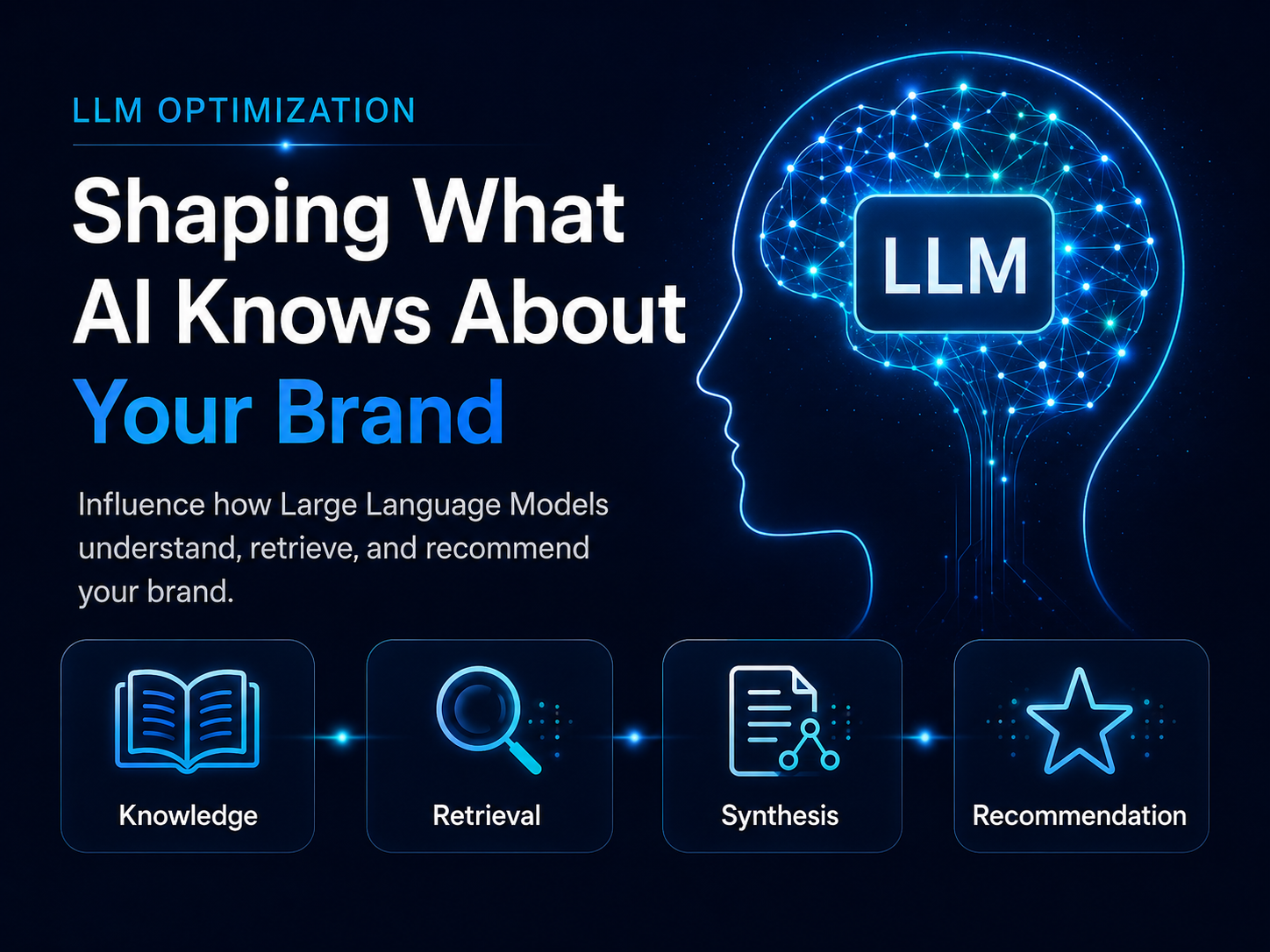
LLM SEO — also called LLMO (Large LanguageModel Optimization) — is the practice of optimising your content, technicalinfrastructure, and digital brand presence so that large language models canfind, understand, and cite you when generating answers to user queries.

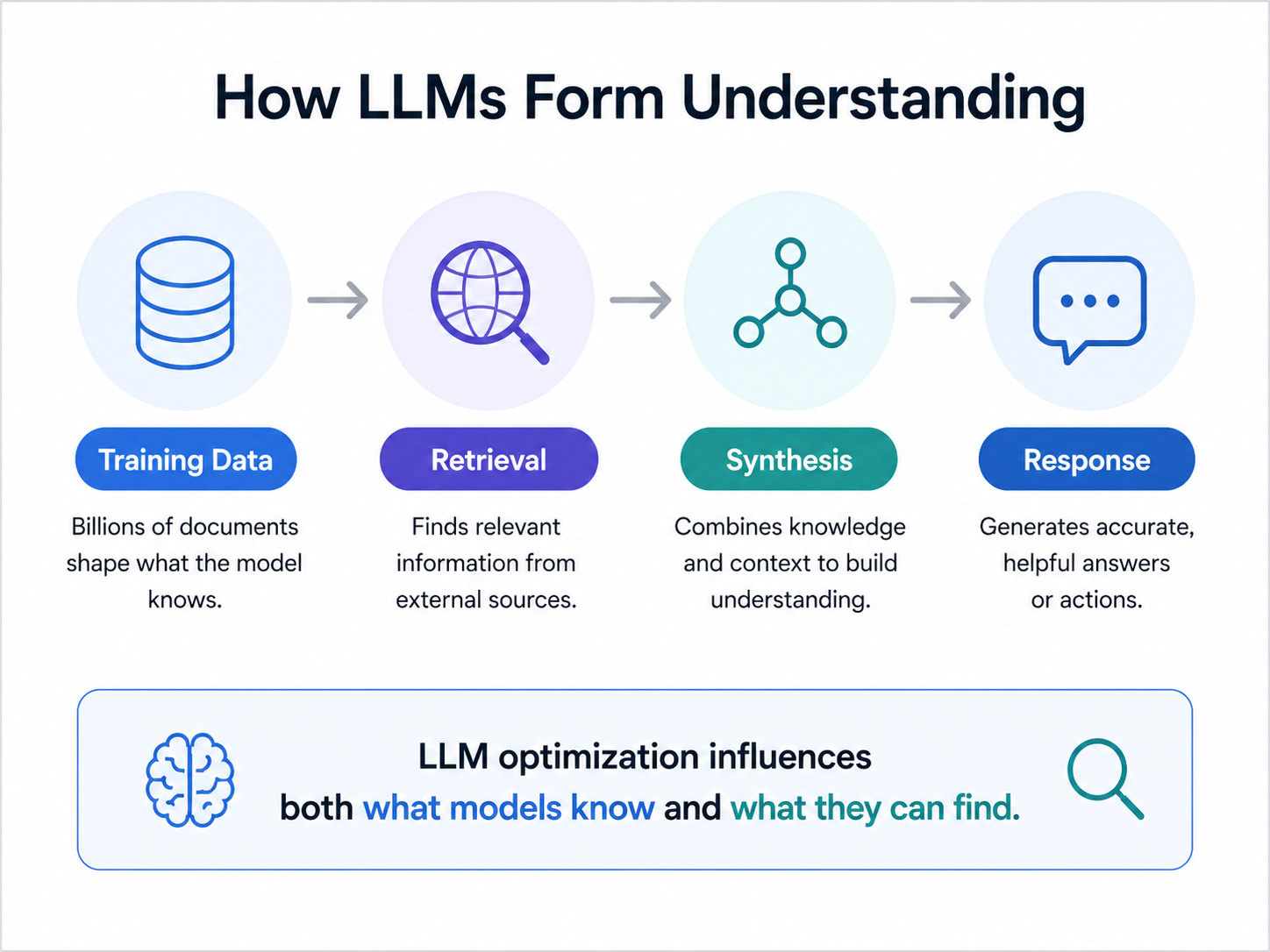
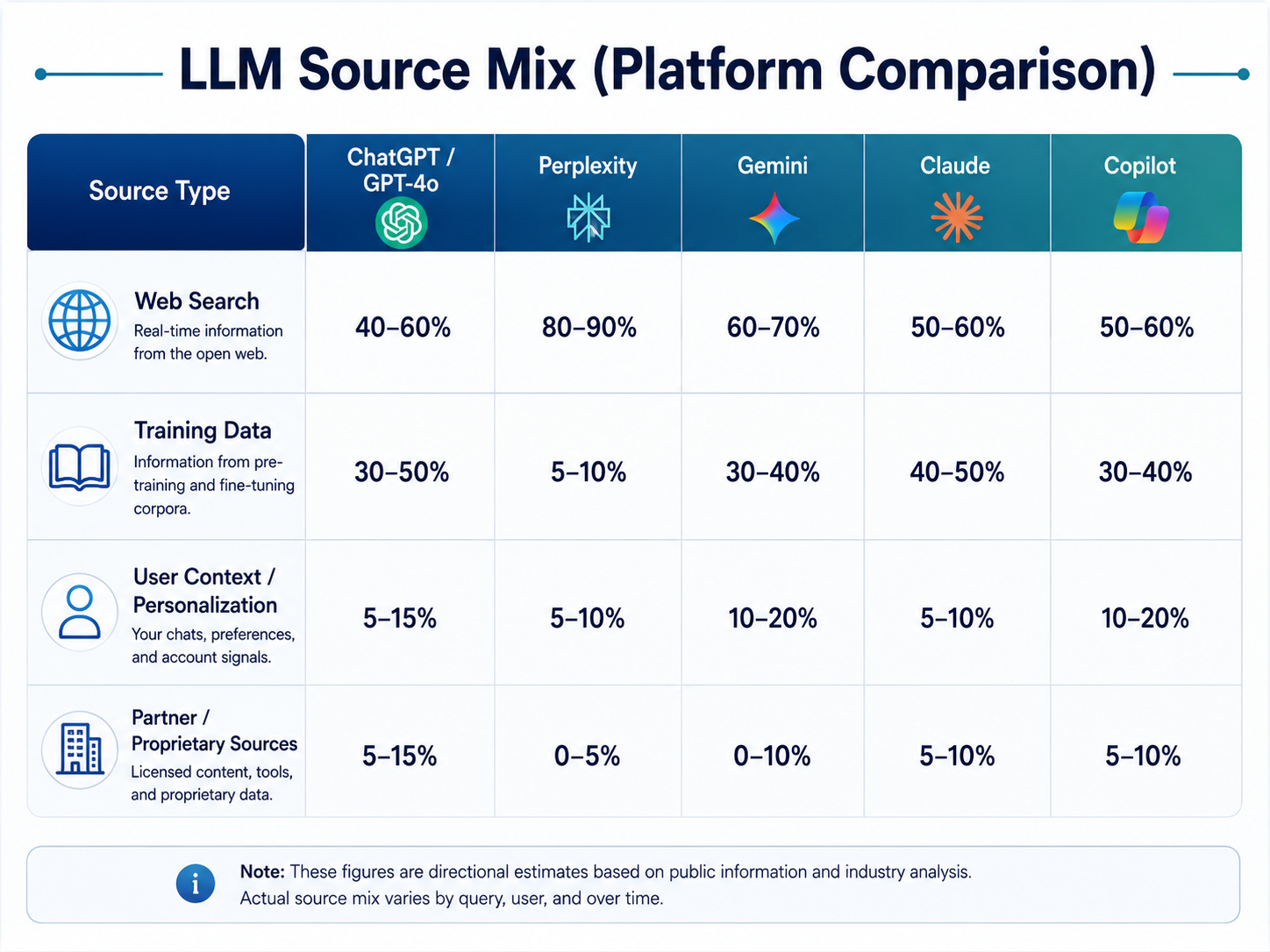
Large Language Models (LLMs) are the AIsystems powering ChatGPT, Perplexity, Google Gemini, Claude, and MicrosoftCopilot. They are trained on vast datasets of text — billions of web pages,books, and documents — and they generate human-like responses by predicting themost contextually appropriate continuation of any input they receive. When auser asks an LLM a question, the model does not search a keyword index andreturn a ranked list. It understands the question, retrieves relevantinformation, synthesises it, and delivers a direct answer — citing the specific sources it drew from.

If traditional SEO gets your content rankingon Google, LLM SEO gets your content into the answers that AI delivers directlyto users. The distinction is the difference between being one of ten links on aresults page and being the named source inside the answer itself. As LLMrefs’ 2026complete LLM SEO guide frames it: LLM SEO is now as critical astraditional search optimization, precisely because AI is replacing link-basedsearch as the default discovery mechanism for a growing share of buyerjourneys.

[fs-toc-omit]The Terminology Landscape

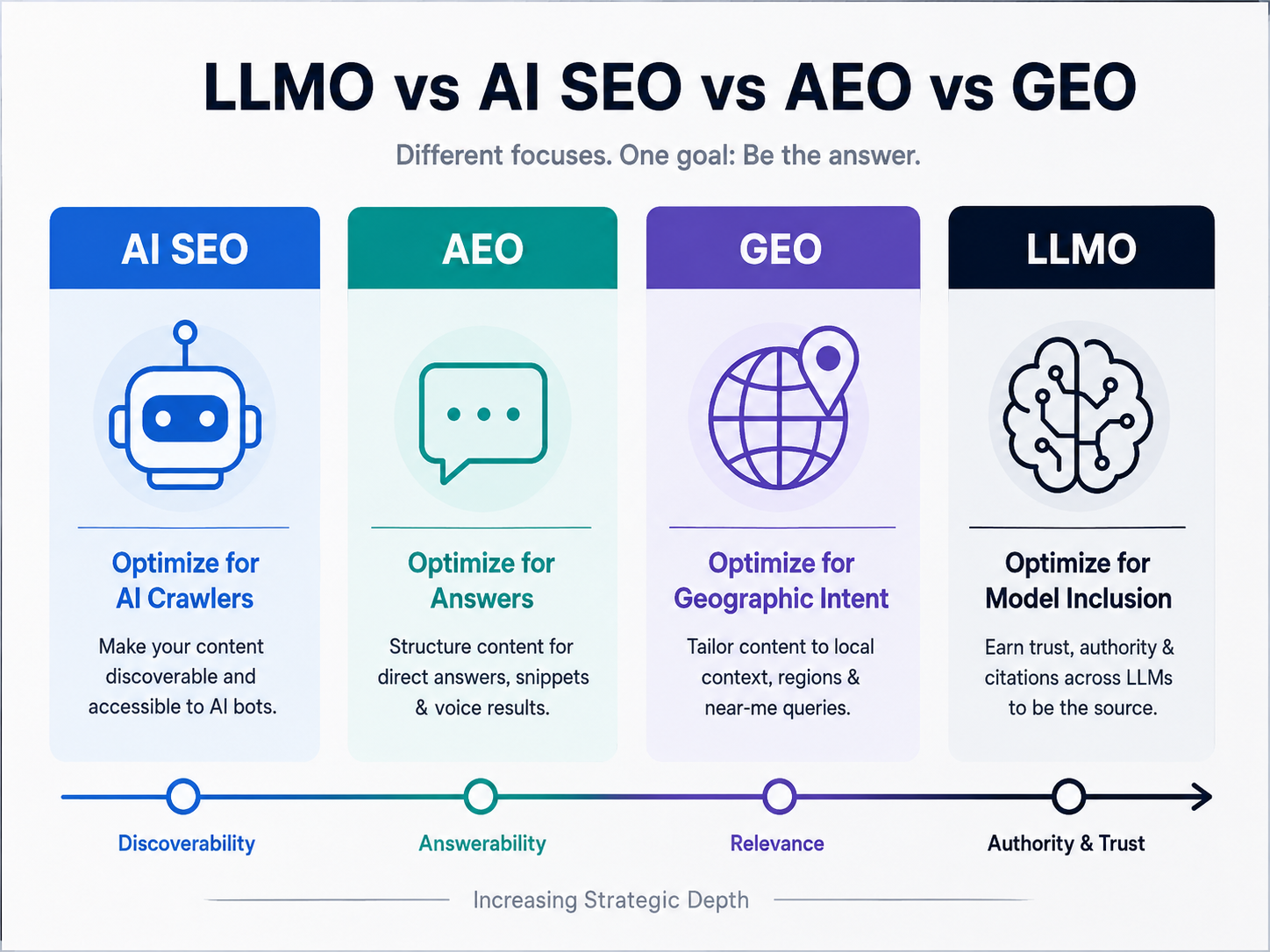
LLM SEO, GEO (Generative Engine Optimization), AEO (Answer Engine Optimization), and LLMO (Large Language Model Optimization) all refer to overlapping but distinct aspects of optimizing for AI-powered search. Understanding how they relate prevents strategic confusion:

Dimension Traditional SEO LLM SEO / LLMO GEO (subset of LLM SEO)
Full name Search Engine Optimization Large Language Model SEO / LLMO Generative Engine Optimization
Born Late 1990s — PageRank era 2023-2025 — LLM search era 2024-2025 — formalised by Princeton paper
Goal Rank in keyword results list Get cited by LLMs in AI-generated answers Get cited in synthesised AI responses
Relationship Foundation layer Umbrella term covering GEO + AEO Subset of LLM SEO targeting AI synthesis
Key platforms Google, Bing organic SERPs ChatGPT, Perplexity, Gemini, AI Mode All generative AI platforms simultaneously
Core signal Backlinks + keyword relevance Entity clarity + content extractability Brand mentions + authority + passage depth
Retrieval type Keyword index matching Training data + RAG live retrieval Multi-source RAG with passage scoring
Success metric Rankings, clicks, traffic LLM citation rate, Share of Model Citation frequency, brand mention share
AEO overlap Partial — schema helps both AEO is a component of LLM SEO GEO and AEO together form LLM SEO scope
Content format Keyword-optimised long-form Fact-dense, structured, quotable content Passage-structured, directly answerable

For practical purposes, LLM SEO is the broadest term — the umbrella under which GEO and AEO sit. GEO focuses specifically on citation in synthesized AI responses. AEO focuses on featured snippets, voice search, and direct answer extraction. Both are essential components of a complete LLM SEO strategy. This guide covers the full LLM SEO scope.

[fs-toc-omit]The Scale of the Opportunity

The commercial case for LLM SEO is quantifiable. AI referral traffic converts at 4.4 times the rate of standard organic visitors and users spend 68% more time on site, according to Semrush’s2026 research. ChatGPT drives 87.4% of all AI referral traffic. When ChatGPT recommends two or three businesses in a category, those businesses earn the highest-intent buyer consideration available in digital marketing. But only 20%of organizations have begun implementing LLM SEO, while 70% believe it will significantly impact their strategy within one to three years — a gap that represents the first-mover advantage still available to brands that move now. As BASE Search Marketing’s 2026 LLM SEO guide identifies: this is the most significant shift in digital marketing since the early days of Google SEO.

When ChatGPT recommends three businesses, those are the only three that exist in that buyer's mind. LLM SEO is the discipline that determines whether your Brandis one of them.

How Large Language Models Process Content

Understanding how LLMs process content is the prerequisite for optimising effectively for them. LLMs are not keyword-matching systems with a conversational interface. They are semantic understanding systems that evaluate meaning, context, entity relationships, and factual credibility — and they retrieve and synthesize information through afundamentally different architecture than traditional search engines.

[fs-toc-omit]What Large Language Models Actually Are

A large language model is a neural network trained on massive text datasets to predict the most contextually appropriate continuation of any input. During training, the model learns statistical relationships between words, concepts, entities, and facts across billions of documents. It builds an internal representation of language and knowledge — aparametric model — that allows it to answer questions, generate text, and reason across contexts without looking anything up, based purely on what it learned during training.

The models powering today's AI searchplatforms are orders of magnitude larger than their predecessors. GPT-4 has anestimated 1.8 trillion parameters. Google's Gemini Ultra is comparable inscale. These models have learned not just language patterns but conceptualrelationships, entity associations, factual claims, and the reliability signalsthat make certain sources more trustworthy than others. They are not neutralretrieval systems — they have learned which brands are credible, which sourcesare authoritative, and which claims are verifiable, based on patterns in theirtraining data.

[fs-toc-omit]Context Windows and Passage Extraction

Every LLM has a context window — the maximum amount of text it can process at once. This limit has grown significantly(GPT-4 supports up to 128,000 tokens; Gemini 1.5 Pro supports one million tokens) but it still shapes how content is retrieved and processed. For most real-time RAG queries, AI systems do not load entire websites into their context. They extract specific passages — chunks of roughly 100-167 words —that are most relevant to the specific sub-query being answered. This passage-level extraction is why content structure is more important for LLM SEO than overall page quality: the passage that earns the citation may be oneparagraph from a page, and that paragraph must be self-contained, directly answerable, and factually specific.

The Two LLM Retrieval Pathways

Every major LLM retrieves information throughtwo distinct pathways when generating responses. Understanding both is critical— because each requires a different optimisation approach, and the two pathwaysreinforce each other when both are addressed.

Dimension Pathway 1: Parametric Training Data Pathway 2: Live Retrieval (RAG)
How it works Model learns brand associations during periodic training cycles on datasets like Common Crawl, books, and web text Model searches live web in real time when user asks a current-information query; retrieves, re-ranks, and synthesises passages
Share of queries Dominates 60% of ChatGPT queries — conversational, analytical, and non-time-sensitive questions Dominates time-sensitive, commercial, and comparative queries; all Perplexity queries; Google AI Overviews
Update cadence Months to years — model training is periodic; brand must be present BEFORE training cut-off Real-time — live search means today’s content can be cited today if crawled and indexed
Key signals Consistent brand presence across authoritative sources pre-training; Wikipedia; Common Crawl coverage Organic ranking (for AIO), FAQPage schema, BLUF structure, freshness, static HTML, crawl access
Optimisation approach Build long-term brand authority across trusted publications, Wikipedia, Wikidata, and industry sources Technical SEO + structured data + direct-answer formatting + content freshness + Bing Webmaster Tools
Who benefits most Established brands with broad web footprint; brands mentioned in Wikipedia or major publications Any brand with good technical setup, structured content, and organic ranking — regardless of brand age
Risk Slow to build; cannot control training data inclusion directly Content must be fresh and well-structured; stale content loses citations at 3x normal rate
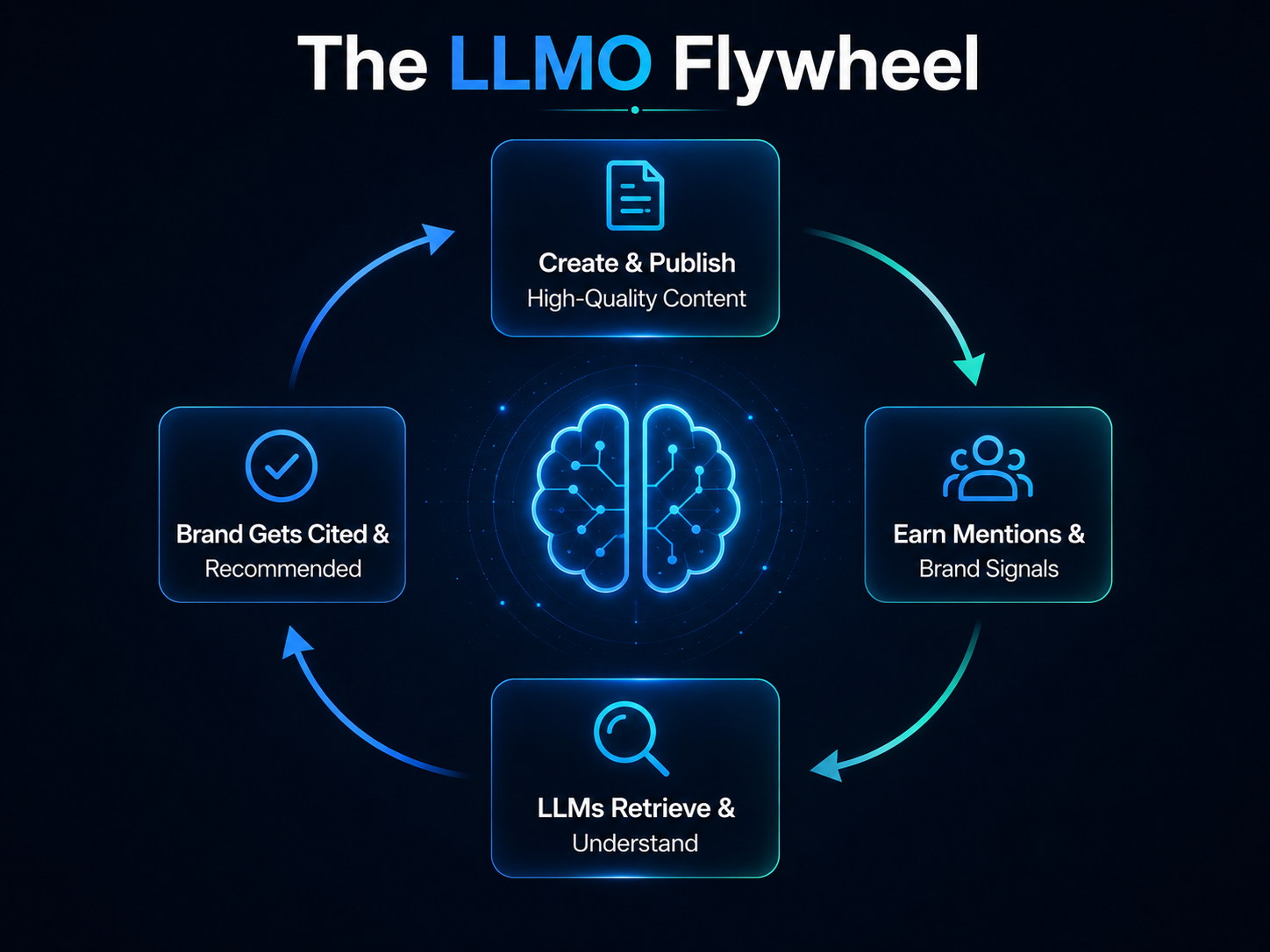
Compound effect Training data presence amplifies RAG performance — model ‘recognises’ brands already in its knowledge RAG performance reinforces training data prominence — cited brands get more web coverage, feeding next training cycle

The compound effect in the final row of thistable is the most strategically important insight in LLM SEO. Virayo’sApril 2026 B2B LLM SEO guide documents it precisely: a brand that isalready in the model’s training data gets a recognition boost when it alsoappears in live retrieval results. The two pathways are not independentchannels. A brand absent from training data can still earn citations throughstrong live retrieval, but it starts from a colder position and needs strongersignals to break through. A brand present in both pathways earns citations moreconfidently, more consistently, and more durably than a brand that hasaddressed only one.

[fs-toc-omit]The RAG Pipeline in Detail

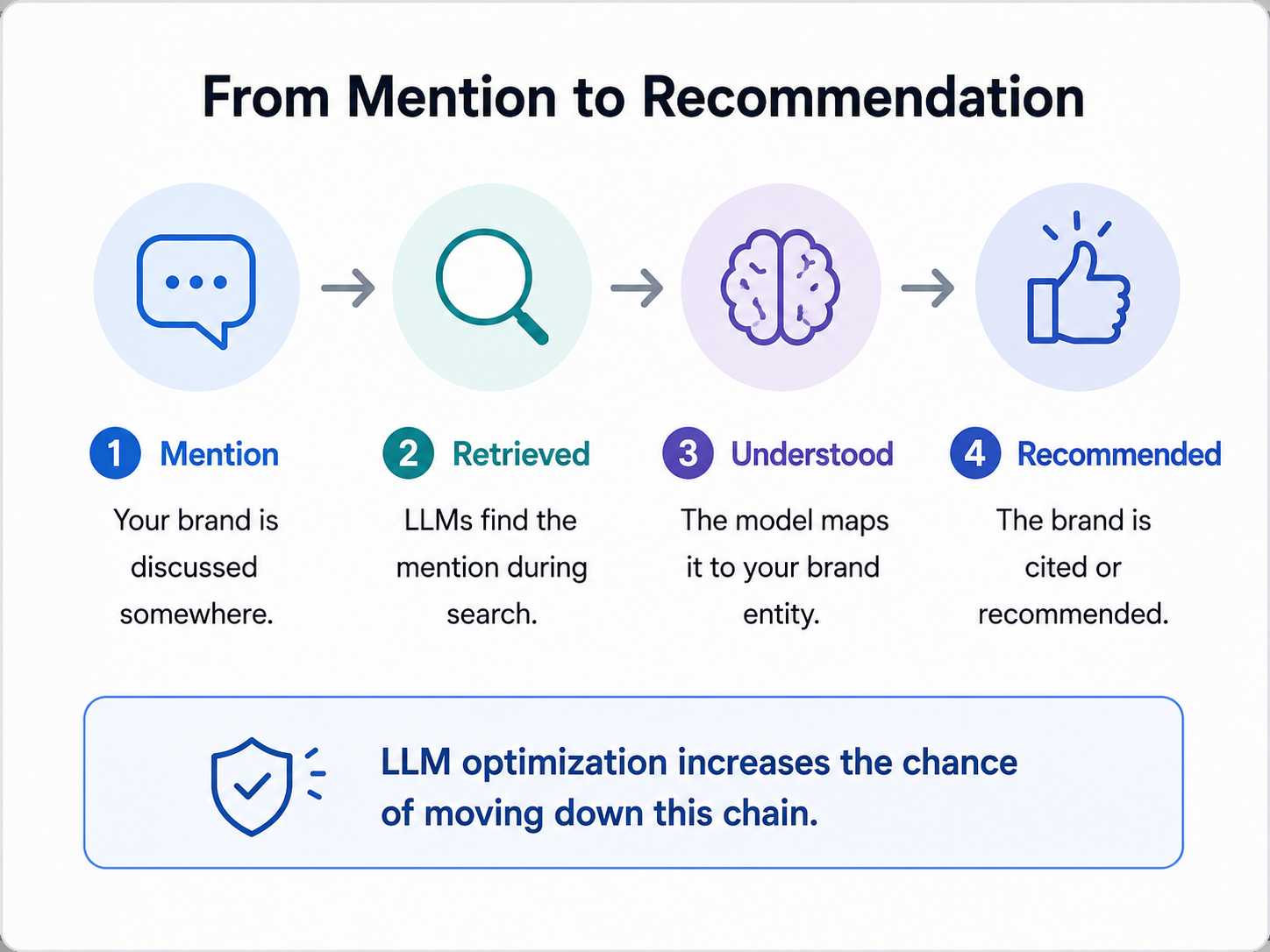
Retrieval-Augmented Generation (RAG) is thearchitecture that allows LLMs to stay current despite fixed training data. Whena user submits a query requiring current information, the RAG system executes aseven-stage pipeline before generating any response:

RAG Stage What Happens LLM SEO Implication
Query receipt User submits a query to LLM platform LLM evaluates whether live retrieval is needed vs training data; temporal or commercial queries trigger RAG
Query fan-out LLM breaks question into 8-15 sub-queries Each sub-query targets a different intent layer; your content must rank for sub-queries, not just the full question
Dual-mode
retrieval
Keyword search + semantic (vector) search run in parallel Keyword retrieval catches exact matches; semantic retrieval catches conceptually related content — both needed
Candidate recall Hundreds of potentially relevant passages retrieved Content with schema, strong organic signals, and static HTML enters candidate pool most reliably
Re-ranking Second-stage re-ranker evaluates each passage against exact query Best Practice: test retrievability by asking LLMs the questions your buyers ask — if it struggles, restructure
Passage
selection
Highest-scoring passages from most credible sources selected E-E-A-T signals, factual specificity, attribution, and structural extractability determine final citation selection
Synthesis LLM assembles selected passages into coherent cited response Brands whose passages earned selection appear in the final answer; all others are invisible in that moment

The re-ranking stage in this pipeline is what Beamtrace’s 2026 LLM Ranking Factors analysisidentifies as the critical differentiator: a second-stage process evaluateseach candidate document against the specific query, asking “Given this exactquestion, how well does this document actually answer it?” rather than trustinginitial retrieval scores. Content that clearly answers the question, with specific facts and clean structure, consistently outperforms content withhigher domain authority but weaker passage extractability.

LLM SEO Ranking Factors

The following table consolidates the primarysignals that determine LLM citation and visibility, drawn from academicresearch, platform-specific citation analysis, and large-scale studies as ofApril 2026. Note that the Bing optimisation row is specific to ChatGPT's liveretrieval pathway and is often overlooked by brands whose LLM SEO strategyfocuses only on Google.

LLM SEO Ranking
Factor
Priority LLM Impact Evidence
Crawl accessibility (AI bots) Critical Very High Three in four websites are partially invisible to AI engines (Sona, 2026); GPTBot block = zero LLM citations
Static HTML rendering Critical Very High AI parse success: static HTML 94% vs JavaScript 23% (Erlin, 2026); most common undiagnosed LLM SEO failure
Direct answer in first
40-60 words
Critical Very High 55% of AI citations from first 30% of page content; BLUF principle is non-negotiable for LLM extraction
Entity clarity
(Organisation schema)
Critical Very High Consistent brand entity resolves knowledge graph disambiguation; sameAs links feed both training and RAG signals
Content freshness Critical High LLMs cite content 25.7% fresher than traditional results; pages updated in past 2 months earn 28% more citations
Factual density with attribution Critical High Princeton GEO study: statistics +37% citation probability; expert quotes +41%; source citations +30%
FAQPage schema
(JSON-LD)
Critical High 3.2x more likely in AI Overviews; maps to LLM Q&A retrieval format; highest-impact single schema type
Question-phrased
H2/H3 headings
Critical High Each heading is a sub-query match target; mirrors how LLMs generate fan-out queries internally
Organic ranking (Bing + Google) High High ChatGPT search uses Bing; brands ranking on page 1 appear in ChatGPT/Perplexity 77% of the time (Aurelius, 2026)
Brand mention diversity High Very High 0.664 correlation with AI citation; YouTube 0.737 — highest single factor; 3x more predictive than backlinks
Author / Person
schema (sameAs)
High High Verified author entities increase citation 2.8x; LLMs evaluate E-E-A-T at author entity level
Off-site review
platform presence
High High G2/Capterra presence: 3x higher ChatGPT citation probability (SE Ranking, 2025)
HowTo schema on
process content
High High Retrieved 6.4x more than paragraph guides; critical for procedural LLM sub-queries
Topical cluster
architecture
High Medium-High Pillar + cluster covers full sub-query fan-out; pages addressing 5+ sub-intents = 3.2x citation lift
Bing Webmaster
Tools setup
High High ChatGPT search runs on Bing; Bing indexing directly feeds ChatGPT live retrieval pipeline
Original research /
proprietary data
High High Sites with original data: 22% visibility increase; cited stats propagate across web, feeding training data
Internal linking
(descriptive anchors)
Medium Medium Topic network mapping for LLM crawlers; Google patent US1163201B2 lists internal links as topical signal
Page speed under
0.4s FCP
Medium Medium 3x more citations for pages under 0.4s FCP vs over 1.13s (AI Clicks, 2025); LLMs have retrieval timeouts

[fs-toc-omit]Why Backlinks Are a Weak LLM SEO Signal

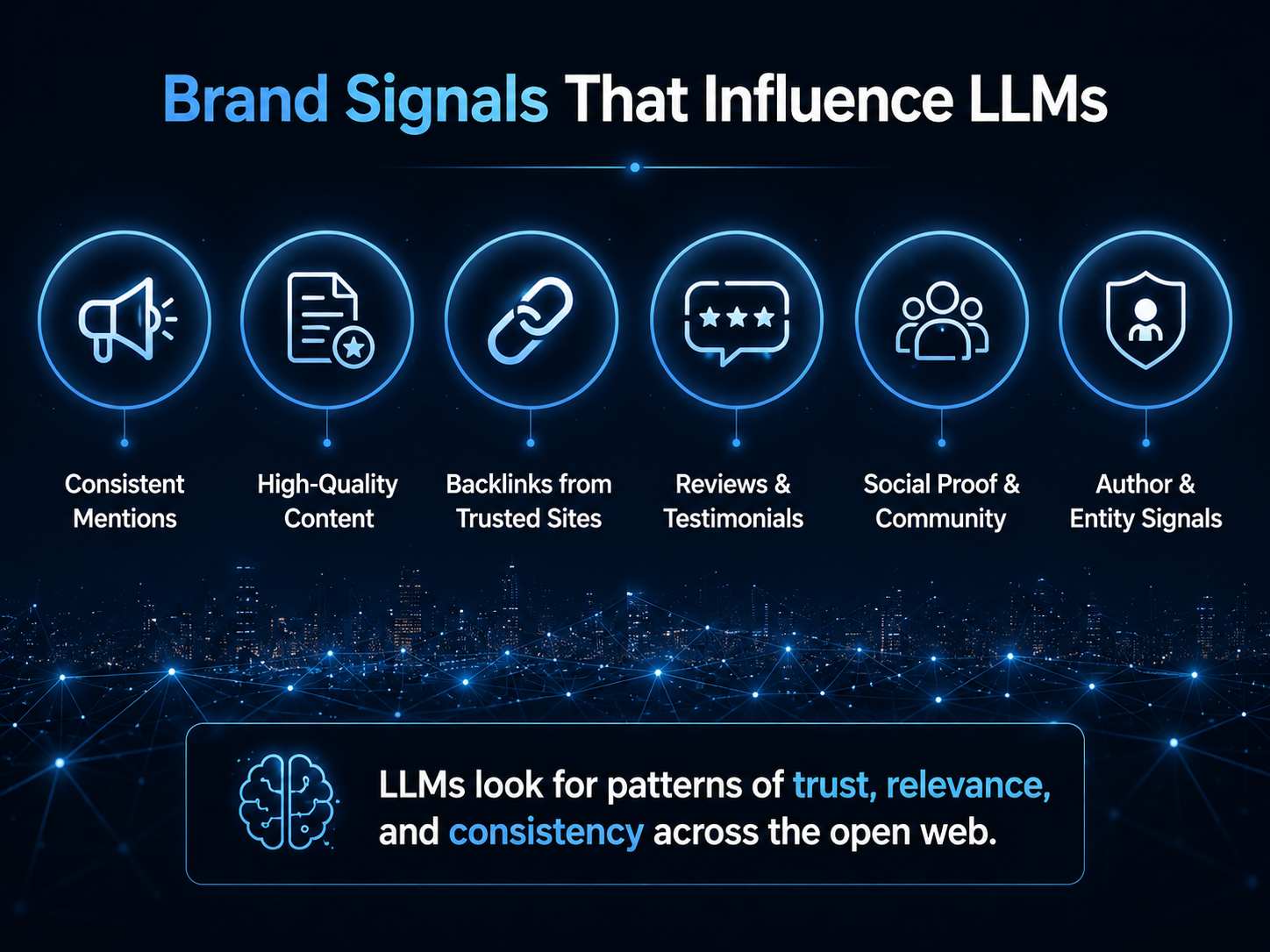
The most counterintuitive finding in LLM SEO research is the weakness of backlinks as a ranking factor. Traditional SEO built an entire discipline around link acquisition. LLM SEO research finds backlinks carry a 0.218 correlation with AI citation probability — compared to0.664 for brand mentions and 0.737 for YouTube mentions specifically. As Beamtrace’s LLM ranking factors guide explains: backlinks carry weak or neutral correlation with AI visibility. LLMs assess authority through E-E-A-T demonstrated within content itself, through named authors with visible credentials, specific case examples, and technical accuracy — not through external link graphs that the LLM’s training process evaluates differently than Google’s PageRank.

This does not mean backlinks are useless for LLM SEO. They contribute to organic rankings that remain a prerequisite for Google AI Overviews, and they build the domain authority that feeds into theretrieval pool entry threshold. But for ChatGPT, Perplexity, and AI Modespecifically, a brand with broad multi-source mentions and entity clarityconsistently outperforms a brand with more backlinks but weaker entity signalsand off-site presence.

Content Strategy for LLM SEO

LLM SEO content strategy is built around asingle principle that departs fundamentally from traditional SEO: AI systemsretrieve passages, not pages. They do not assess your website holistically anddecide whether to recommend it. They scan for specific text blocks thatdirectly answer individual sub-queries — blocks that are self-contained,factually specific, and extractable without surrounding context.

[fs-toc-omit]The Two Retrieval Modes and Content Implications

Content must simultaneously satisfy twodifferent reading modes. For RAG live retrieval, content is evaluated at thepassage level for immediate extractability. For training data, content isevaluated for consistent brand accuracy and authoritative coverage across manysources over time. The structural requirements overlap significantly: bothmodes reward factual density, entity clarity, and direct answer formatting. Butthe timeframe differs — RAG delivers citations within days of publishing;training data influence accumulates over months and years.

[fs-toc-omit]The Content Framework for LLM Citations

Content Element LLM Citation
Value
Implementation Detail
BLUF answers Non-negotiable First sentence of every section answers the implied question completely; no warmup, context, or qualification before the answer
Question
headings
Non-negotiable H2/H3 headings written as exact questions users ask LLMs — each heading is a fan-out sub-query target
Factual density Non-negotiable One verified, named-source statistic every 150-200 words; LLMs use facts to validate citation confidence
Comparison
tables
High value LLMs extract tabular data more reliably than prose for comparative queries; HTML tables with clear headers and specific data
FAQ sections High value FAQPage schema + direct Q&A content = highest LLM citation rate format; add to every key page
Step-by-step
guides
High value HowTo schema retrieves 6.4x more than paragraph guides; procedural queries are a major LLM citation surface
Original data Very high value Data you own that others cite; surveys, studies, analyses — creates multi-source citation chain feeding both pathways
Expert quotes High value Princeton: expert quotes +41% visibility; named sources with credentials satisfy LLM E-E-A-T evaluation at author level
Case studies High value Named brands, specific metrics, verifiable outcomes — evaluative-intent citations build commercial trust in LLMs
Category
definitions
Very high value LLMs use definitional content as primary reference material; brands that define categories earn recurring training data citations

[fs-toc-omit]Optimal Chunk Size for LLM Extraction

Research into LLM passage extraction identifies an optimal chunk size of 100-167 words for maximum LLM retrieval performance, according to Beamtrace’s chunk-level retrieval analysis. Content optimized for chunk-level retrieval is 50% more likely to be selected for AI answers than unstructured equivalents. The practical implementation: write each section to deliver its complete core answer within 100-167 words, then optionally expand with supporting detail. The first 100-167 words of every section are the LLM extraction window. Everything after that is context for human readers.

[fs-toc-omit]Building for the Training Data Pathway

Optimizing for the training data pathway requires a different strategy than optimizing for live retrieval. The goal is to ensure your brand appears accurately and consistently across sources that LLM training datasets draw from — before the next model training cycle. The highest-impact training data sources are:

•       Wikipedia: The most-cited single domain in LLM training datasets. A Wikipedia page for your brand or the category you own creates a training data anchor that LLMs reference for brand disambiguation and category definitions.

•       Wikidata: Structured entity data that LLMs use for entity resolution and knowledge graph construction. A Wikidata entry for your brand entity, with consistent properties and external identifiers, feeds directly into how LLMs represent your brand in their parametric knowledge.

•       Common Crawl coverage: The primary web corpusfor most LLM training. Consistent, accurate brand mentions across well-indexedwebsites are the raw material of training data presence.

•       Industry publications: Authoritative third-party sources that LLM training pipelines weight more heavily than brand-ownedcontent. Being mentioned, cited, or featured in established industrypublications creates training data presence that brand-owned content cannotreplicate.

•       Academic citations: Content that cites academicresearch and is itself cited by academic sources enters training datasets withhigher credibility weight than uncited commercial content.

Technical LLM SEO

Technical LLM SEO covers the infrastructurethat enables AI systems to access, parse, and confidently cite your content.The majority of LLM SEO technical failures are invisible to human visitors —sites look and function normally while AI crawlers silently fail to accesstheir content. These failures are both extremely common and relatively simpleto fix.

[fs-toc-omit]AI Crawler Access

The highest-leverage technical LLM SEO action is verifying that AI crawlers are not blocked. Three in four websites are partially or fully invisible to AI engines according to Sona’s 2026 data. The most common cause: catch-all robot disallow rules that inadvertently block GPT Bot, Perplexity Bot, Claude Bot, and Google-Extended alongside other unwanted bots. Check your robots.txt for any rules that could exclude these user agents. The fix takes minutes and its impact is immediate. As LLMrefs’ LLM SEO guide identifies: unoptimized content will not surface in AI-generated summaries regardless of how well it ranks on Google — crawl access is the prerequisite for everything else.

[fs-toc-omit]Bing Webmaster Tools: The Overlooked LLM SEO Requirement

Most LLM SEO guides focus on Google and missa critical technical requirement: Bing. ChatGPT's live retrieval system runs on Bing. A brand not indexed in Bing is invisible to ChatGPT's real-time search pathway, regardless of its Google rankings or content quality. Setting up Bing Webmaster Tools, submitting your XML sitemap, verifying domain ownership, and monitoring Bing crawl health are LLM SEO technical actions that most brands have not taken. For ChatGPT specifically, Bing optimization is not a secondary consideration — it is a direct prerequisite for live retrieval citation.

[fs-toc-omit]Static HTML Rendering

AI parse success for static HTML runs at 94%versus JavaScript-rendered content at 23%, according to Erlin's 2026 research. If your site relies on client-side JavaScript rendering — React, Vue, Angular with client-only rendering — AI crawlers may be unable to extract your content regardless of its quality or schema implementation. Server-side rendering(SSR), static site generation (SSG), or hybrid rendering approaches are the technical solutions. This is not a marginal performance optimization — it is a binary visibility requirement. A JavaScript-rendered page that AI cannot parse earns zero LLM citations.

[fs-toc-omit]Schema Markup for LLM Readability

Schema markup is the technical layer that converts your content from text that LLMs must interpret into structured data they can read with certainty. The correct implementation is JSON-LD in a single graph block containing Organization, Article, Author (Person), FAQP age, and How To schema as relevant. All same As links must connect to live, verified external profiles. The @id property must be consistent across all entity references to build coherent knowledge graph nodes across pages and sites.

LLMs use schema to resolve entity disambiguation, verify content type and authorship, and evaluate freshnessthrough dateModified. A page with correctly implemented schema that matches itsvisible content earns citation with higher confidence than an identically written page without schema — because the schema provides machine-readableconfirmation of what the page claims, reducing the hallucination risk thatmakes LLMs cautious about citing unverified sources.

[fs-toc-omit]The llms.txt Standard

An emerging technical standard for LLM SEO is the llms.txt file — a plain-text file at the root of your domain that guides AI systems toward your most authoritative pages. It communicates to LLM crawlers which pages represent your canonical expertise, which content has been structured for AI extraction, and which sections of your site should receivethe most retrieval attention. Implementation is simple and takes under an hour. It is one of the few LLM SEO technical signals with measurable directional impact and no downside risk.

Building LLM SEO Authority: The Off-Site Dimension

Content quality and technical infrastructure determine whether your pages can be retrieved and extracted by LLMs. Off-site authority determines whether LLMs consider your brand credible enough to cite. The two are both necessary. Neither is sufficient alone.

[fs-toc-omit]The Brand Mention Signal

Brand mentions correlate with AI citation probability at 0.664 — more than three times the correlation of backlinks. YouTube mentions carry the highest single-factor correlation at 0.737. This is not a marginal optimization — it is a fundamental signal reorientation. The strategic implication: LLM SEO authority is built across the web, not on your own website. Stacker’s December 2025 research found that distributing content to a wide range of publications can increase AI citations by up to 325% compared to publishing only on your own site. That is not a minoruplift. It is a structural advantage available to any brand willing to invest in multi-source presence rather than single-site optimisation.

[fs-toc-omit]Wikipedia and Wikidata: The Training Data Foundation

Wikipedia is the most-cited single domain in LLM training datasets and consistently appears at the top of training data source hierarchies. For brands that can legitimately qualify for a Wikipedia page — through notability established by significant third-party coverage —creating and maintaining an accurate, well-referenced Wikipedia entry is the highest-leverage single training data investment available. It creates apersistent, authoritative anchor for brand entity disambiguation that LLMs reference across both parametric knowledge and RAG retrieval.

Wikidata serves a different but complementary function: it is the structured entity database that LLMs use for entity resolution and knowledge graph construction. A Wikidata entry for your brand, with consistent properties linking to your website, social profiles, and founding information, feeds directly into how LLMs represent your brand in their internal entity models.

[fs-toc-omit]Platform-Specific Off-Site Strategy

YouTube: Overtook Reddit as the most cited social platform in AI responses in early 2026 (Adweek). Create video content on core topics; include full transcripts; add Video Object schema. YouTube content is dual-purpose: it builds brand authority for LLM training data and it provides text-accessible content via transcripts for RAG retrieval.

Reddit: Perplexity draws heavily from Reddit threads. Identify communities where your buyers discuss problems in your category. Contribute substantive, helpful answers with genuine expertise. Community validation signals build Perplexity citation presence faster than most owned-media investments.

LinkedIn: Microsoft Copilot drawsheavily from LinkedIn for B2B queries. A well-maintained company page withconsistent brand description, regular thought leadership posts, and verifiedemployee profiles is a direct Copilot LLM SEO signal. Most B2B brands have LinkedInbut have not optimised it as an LLM SEO asset.

Industry publications: Authoritativementions in trade publications carry training data weight that brand-ownedcontent cannot replicate. Target publications that LLMs already cite for yourcategory — these vary by industry but consistently include major tradepublications, analyst firm reports, and established news outlets in eachsector.

LLM SEO Best Practices Checklist

The following 30-point checklist consolidatesevery LLM SEO implementation action in priority order. Use it as acomprehensive audit for building AI search visibility across both retrievalpathways:

# LLM SEO Implementation Action Priority
1 Allow GPT Bot, Perplexity Bot, Claude Bot, Google-Extended, Bing bot in robots.txt Critical
2 Ensure all pages render as server-side / static HTML — no JavaScript-only delivery Critical
3 Set up Bing Webmaster Tools — ChatGPT live retrieval runs on Bing index Critical
4 Open every section with a standalone direct answer in 40-60 words (BLUF) Critical
5 Write H2/H3 headings as natural questions mirroring LLM sub-query language Critical
6 Add Organisation schema with sameAs (LinkedIn, Wikidata, Crunchbase) to homepage Critical
7 Add Article + Author (Person) schema with sameAs on every content page Critical
8 Implement FAQ Page schema on all pages answering common questions Critical
9 Combine all schema in one JSON-LD @graph block; validate with Rich Results Test Critical
10 Include one verified, named-source statistic every 150-200 words throughout Critical
11 Add HowTo schema to all step-by-step and process-based content High
12 Add Speakable schema to flag most citable passage in long-form content High
13 Add visible Last Updated date to all strategic pages High
14 Cite credible external sources within your content (academic, government, industry) High
15 Build pillar + cluster architecture with bidirectional internal links High
16 Add FAQ section at bottom of every key page High
17 Add comparison tables for evaluative / commercial queries High
18 Get listed on G2, Capterra, Trustpilot, or relevant review platform High
19 Contribute to 3+ credible industry publications — build off-site brand mentions High
20 Optimise and actively maintain LinkedIn company page High
21 Create YouTube content on core topics with full transcripts High
22 Build active substantive presence on relevant Reddit communities High
23 Publish original research or proprietary data that others cite High
24 Ensure Wikipedia page exists or Wikidata entry created for brand entity Medium
25 Build an llms.txt file guiding AI crawlers toward authoritative pages Medium
26 Assign consistent @id values to recurring entities across all schema Medium
27 Optimise page speed — target FCP under 0.4 seconds Medium
28 Set up GA4 custom Generative AI channel group (chat.openai.com, perplexity.ai) Ongoing
29 Track LLM citation rate monthly: 30-40 prompts across ChatGPT, Perplexity, Gemini Ongoing
30 Refresh key pages quarterly — update statistics, datelines, and examples Ongoing

Measuring LLM SEO Performance

Measuring LLM SEO requires a different framework than traditional SEO. LLM citation is not captured in Google Analytics by default. A brand earning consistent ChatGPT citations may show minimal measurable change in organic traffic—because the citation produces brand influence at the point of query, not a trackable click. The measurement framework must capture both the citations themselves and their downstream commercial impact.

LLM SEO Metric What It Measures How to Track It
Share of Model (SoM) How often your brand is mentioned when LLMs discuss your category vs competitors Define 30-40 target prompts; track monthly across ChatGPT, Perplexity, Gemini, AI Mode
LLM Citation Rate Percentage of relevant AI responses that cite your content with a source link Manual monthly prompt testing + Profound / Otterly.ai for automated scale tracking
AI Referral Traffic Sessions arriving from LLM platforms (chat.openai.com, perplexity.ai, etc.) GA4 custom Generative AI channel group; filter by known AI referral domains
AI Visitor Conversion Rate How AI-referred visitors convert vs organic baseline (benchmark: 4.4x higher) Segment AI referral sessions; compare goal completion, session duration vs organic
Brand Mention Accuracy How accurately LLMs describe your brand, category, and value proposition Manual monthly checks; flag hallucinations; test brand description consistency
Training Data Presence Whether established LLMs include your brand in parametric knowledge (non-RAG mode) Test ChatGPT with search disabled; ask open-ended category questions without retrieval
Competitive LLM Share Your LLM citations vs competitors for the same target query set Profound, Superlines, Omnia for competitive share-of-voice across AI platforms
Bing Visibility Rankings in Bing for sub-queries ChatGPT generates from target topics Bing Webmaster Tools; Semrush or Ahrefs with Bing data enabled

[fs-toc-omit]Testing for Training Data Presence

One measurement action unique to LLM SEO is testing whether your brand has penetrated parametric training data — the knowledge encoded in the model itself, not retrieved from live search. To test this, use ChatGPT with web search disabled (available in the model settings).Ask open-ended questions about your category without mentioning your brand: "Who are the leading agencies in X space?" or "What companies are known for Y?" If your brand appears in responses generated without live retrieval, it has training data presence. If it does not appear, it exists only in live retrieval — a weaker position that requires stronger real-timesignals to maintain citation consistency.

[fs-toc-omit]Building a Monthly LLM SEO Report

1.    Define 30-40 target prompts covering your core topics,use cases, and commercial queries — the questions your buyers ask LLMs whenresearching solutions like yours

2.    Run all prompts monthly across ChatGPT, Perplexity, Gemini, and Google AI Mode; record whether your brand appears, whether it iscited with a link, and how it is described

3.    Calculate citation rate (appearances / total prompts)and Share of Model (your appearances / all brand appearances) for each platformseparately

4.    Track Bing rankings for the sub-query fragments your target topics generate — these are the organic signals feeding ChatGPT liveretrieval

5.    In GA4, segment AI referral traffic and compareconversion rate, session duration, and goal completion against organic baseline

6.    Document the competitive citation share: for promptswhere you do not appear, which competitors are cited and what content structurethey are using

LLM SEO Case Studies

The following case studies document real-world LLM SEO results acrossindustries, drawn from published research and documented brand outcomes:

Brand Category LLM SEO Strategy Outcome
Stripe Fintech Deep, well-structured content across all payment processing intent layers; strong entity consistency; active community presence Consistently outperforms larger competitors in LLM citations across ChatGPT, Perplexity, AI Mode, and Gemini (ALM Corp, Dec 2025)
NerdWallet Personal Finance Expert direct answers to common financial questions; FAQ Page schema throughout; verified author entities with credentials Maintained revenue growth despite AI-driven traffic pressure; became the default financial information source for LLMs across multiple platforms
B&H Photo Electronics Deep specialist content for technical sub-queries incumbents ignored; HowTo schema; specific model comparisons with verifiable specs AI visibility index nearly tripled despite ranking 7th in sector — specialist content depth outperforms broad domain authority in LLM citation
Enrich Labs B2B / GEO Comprehensive topic cluster; structured data on all pages; original data; off-site authority in GEO publications 2,200+ monthly LLM referral sessions from ChatGPT, Perplexity, Gemini, Claude without relying on traditional rankings
Verano B2B Marketing Content addressing both LLM training data pathway and RAG pathway simultaneously; category definition content; entity clarity Documented consistent LLM citation performance across commercial B2B queries — cited in ChatGPT responses for agency-related queries
Beam trace AI/Tech Chunk-level content optimisation (134-167 word optimal extraction units); structured for LLM passage retrieval specifically Content optimised for chunk-level retrieval is 50% more likely to be selected for AI answers than unstructured equivalents (Beamtrace internal data)

The Beamtrace finding — that content optimised for chunk-level retrieval is 50% more likely to be selected for AI answers — represents the clearest evidence that LLM SEO is a structural contentdiscipline, not a keyword-adjustment exercise. The Washington Post’s 4-5xconversion rate from LLM-referred visitors, documented by their Chief RevenueOfficer, represents the commercial case: LLM-referred buyers arrivepre-qualified, having already processed the synthesized answer that cited the Post, and they convert at dramatically higher rates because the citation itselfis a high-authority recommendation. Every LLM SEO investment should be evaluated against that conversion quality benchmark, not just traffic volume.

Common LLM SEO Mistakes

Mistake 1 — Blocking AI crawlers without realising it. The most common and most damaging LLM SEO mistake is technical and invisible: catch-all robot disallow rules blocking GPTBot, Perplexity Bot, or Claude Bot. Three in four websites have AI engine visibility issues. Check robots.txt as the first LLM SEO action. Nothing else matters if AI crawlers cannot read your content.

Mistake 2 — Ignoring Bing for ChatGPT optimisation. Most LLM SEO strategies focus entirely on Google and ove lookBing — the search infrastructure that powers ChatGPT’s live retrieval. Not indexing in Bing, not using Bing Webmaster Tools, and not monitoring Bingrankings for core sub-queries means being invisible to 87.4% of AI referraltraffic’s primary source during live retrieval queries.

Mistake 3 — Treating LLM SEO as purelyon-site work. The brand mention correlation data is unambiguous: 0.664 formentions versus 0.218 for backlinks. 85% of AI brand mentions originate fromthird-party sources. Brands that invest entirely in on-site contentrestructuring while ignoring off-site mention building are addressing 15% ofthe LLM authority signal and neglecting 85% of it.

Mistake 4 — Publishing AI-generatedcontent as LLM SEO content. This is the most counterproductive mistake in2026. LLMs are trained to recognise AI-generated content patterns, and afterGoogle’s March 2026 core update, mass-produced unedited AI content saw a 71%traffic drop. LLMs want content they have not seen before — original insights,primary research, genuine expertise. AI-generated content without expert humanediting is the opposite of what earns LLM citations.

Mistake 5 — Optimizing for only one LLM platform. The same brand can see citation volumes differ by 615x between Grok and Claude (Superliners data, March 2026). Perplexity is down 36% from its November 2025 peak. AI Mode is up 27%. The citation landscape across LLM platforms shifts constantly. Multi-platform tracking and optimization is the only approach that captures the full LLM SEO opportunity — and the only approach that insulates against platform-specific citation volatility.

Mistake 6 — Waiting for LLM SEO to be moremature before starting. The first-mover advantage in LLM SEO is real and compounding. Training data presence accumulates over time. Citation history feeds more citations. Brands visible in LLM training data today are more difficult to displace as model versions update. Every quarter of inaction is a quarter of compounding disadvantage relative to competitors building LLM SEO authority. As LLM refsestablishes, LLM SEO is already as critical as traditional search optimization was in 2010 — the window for first-mover advantage is still open, but it is closing.

The Future of LLM SEO

Agentic LLMs will become the next search surface. The next evolution of LLM SEO is not answer generation — it is task completion. Open AI’s Agentic Commerce Protocol and Shopify’s AI agent checkout integration are not concepts. They are live. AI agents are already browsing, evaluating, and completing purchases on behalf of users. The brands appearing in those agent workflows are the ones that have built strong LLM visibility before agentic search becomes the mainstream interface. The LLM SEO you invest in today feeds the agentic visibility you will need in 2027.

Model training cycles will accelerate. As AI companies compete, model training frequency is increasing. This means the window for training data influence is shortening — brands that build multi-source web presence must maintain it continuously rather than achievingit once. The quarterly content refresh cycle that benefits RAG retrieval also benefits training data recency, because models trained more frequently will incorporate more recent web content. Consistency and freshness are compounding advantages.

Vertical LLMs will createcategory-specific optimisation opportunities. Healthcare, legal, financial services, and other regulated sectors are seeing the emergence of vertical-specific LLMs trained on domain-specific data. LLM SEO for these verticals will require presence in the specific professional publications, clinical databases, regulatory bodies, and industry associations that vertical LLMs train on — not just the general web. Brands in regulated industries should monitor vertical LLM development and begin building presence invertical-specific authoritative sources now.

LLM SEO measurement will mature rapidly., most brands have no visibility into their LLM citation performance. As specialist tracking platforms mature, as AI referral traffic grows inabsolute volume, and as brands begin recognising the revenue impact of LLM visibility, measurement standardization will accelerate. The brands that buildmeasurement infrastructure now — before it is standardised — will have monthsof baseline data that allows faster optimisation response as the landscape shifts.

LLMSEO is not an advanced tactic for brands that have finished their traditional SEO work. It is the next required layer of digital visibility for any brandwhose buyers research, compare, or discover solutions online. The brands thatunderstand this in 2026 are building the compounding advantages that willdefine category leadership in 2028.

Frequently Asked Questions

[fs-toc-omit]What is LLM SEO?

LLM SEO (Large Language Model SEO) — also called LLMO (Large Language Model Optimization) — is the practice of optimizing content, technical infrastructure, and off-site brand presence so that large language models powering AI search platforms select, cite, and recommend your brand when generating answers to user queries. It encompasses both GEO(Generative Engine Optimization) and AEO (Answer Engine Optimization) as its core disciplines, applied across ChatGPT, Perplexity, Google AI Overviews, Google AI Mode, Gemini, and voice assistants.

[fs-toc-omit]How is LLM SEO different from traditional SEO?

Traditional SEO optimises for keywordrankings in a list of blue links, measured by positions, clicks, and organictraffic. LLM SEO optimises for citation inside AI-generated answers, measuredby citation rate, Share of Model, and AI referral conversion quality. The keystructural difference: traditional SEO evaluates pages, LLM SEO evaluatespassages. A page can rank first on Google and be invisible in ChatGPT. A pagecan have no organic ranking and be consistently cited by Perplexity. Bothrequire strong content quality, but they reward different structural signals.

[fs-toc-omit]What are the two pathways LLMs use to retrievecontent?

Large language models discover and citecontent through two distinct pathways. The first is parametric training data —knowledge encoded into the model during periodic training cycles from datasetslike Common Crawl, web text, and books. This pathway dominates 60% of ChatGPT queries and builds long-term brand familiarity. The second is live retrievalvia RAG (Retrieval-Augmented Generation) — where the model actively searches the web in real time for current information. ChatGPT uses Bing for this. Perplexityuses its own crawler. Google AI Overviews use Google's index. Effective LLM SEO addresses both pathways simultaneously.

[fs-toc-omit]Why does Bing matter for LLM SEO?

Bing matters for LLM SEO because ChatGPT —which drives 87.4% of all AI referral traffic according to Conductor's 2026benchmarks — uses Bing for its live web retrieval. When a user asks ChatGPT aquestion requiring current information, ChatGPT searches Bing to find relevantpages. If your site is not indexed in Bing, it cannot be retrieved for thosequeries, regardless of how well-structured your content is. Setting up BingWebmaster Tools, submitting your sitemap to Bing, and monitoring Bing rankings foryour core sub-queries are essential LLM SEO actions that most brands haveoverlooked.

[fs-toc-omit]What is RAG and why does it matter for LLM SEO?

Retrieval-Augmented Generation (RAG) is thehybrid architecture that allows LLMs to stay current despite fixed trainingdata. When a query requires current information, the LLM system searches thelive web, retrieves relevant content, re-ranks the retrieved passages againstthe specific query, and incorporates the highest-scoring passages into itsgenerated answer. For LLM SEO, RAG means that on-page content quality,technical accessibility, structured data, and organic indexation directlyinfluence which brands get cited in real-time AI responses — not just brandsthat were prominent in historical training data.

[fs-toc-omit]How do I get my brand into LLM training data?

Getting into LLM training data requiresbuilding consistent, accurate brand presence across the web before trainingcut-off dates — which are periodic and cannot be precisely anticipated. Thehighest-value sources for training data inclusion are Wikipedia (the most-citedsingle domain in LLM training), Wikidata (structured entity data that LLMs usefor entity resolution), major industry publications, Common Crawl-indexedwebsites, and authoritative third-party references. Brands with a Wikipediapage, consistent Wikidata entity, and mentions across major publications havesignificantly higher training data presence than brands whose digital footprintis limited to their own website.

[fs-toc-omit]What content format works best for LLM SEO?

Content optimised for LLM SEO uses the BLUF(Bottom Line Up Front) structure: every section opens with a direct 40-60 word answer in the first sentence, followed by supporting evidence, before anycontext or background. Question-phrased H2/H3 headings mirror the sub-queries LLMs generate internally.

One verified, named-source statistic appearsevery 150-200 words. Comparison tables address evaluative queries. FAQ sections with FAQ Page schema are added to every key page. The optimal semantic chunksize for LLM passage retrieval is 100-167 words — each section should deliverits core answer within that window.

[fs-toc-omit]How long does LLM SEO take to produce results?

Technical LLM SEO actions — fixingrobots.txt, adding schema, enabling static HTML — take effect after the next AI crawler visit, typically within days to weeks. Structural content changes produce measurable LLM citation improvements within four to eight weeks for pages already indexed and ranking. Bing optimization for ChatGPT live retrieval follows traditional SEO timelines: weeks to months depending on site authority. Training data influence is the longest horizon — months to years depending onpublication frequency and brand mention accumulation. Off-site authority building operates on three-to-nine months of compounding returns.

[fs-toc-omit]Is LLM SEO relevant for small businesses?

Yes. LLM SEO advantages are structurally accessible to small businesses in ways that traditional SEO sometimes is not. LLMs reward answer clarity, topic-specific depth, and entity consistency over raw domain authority. Only 274,455 domains have appeared in Google AI Overviews out of 18.4 million indexed sites — meaning early-mover LLM SEO investment isavailable to businesses of any size. Three in four websites are currently partially invisible to AI engines due to technical gaps that small businesses can close with modest investment. A small business with genuine category expertise, structured content, and consistent off-site presence can earn LLM citations ahead of large competitors that have not yet addressed these signals.

Dive Deeper

No items found.

Related Case Studies