.svg)
.svg)

AI Optimisation: The Complete 2026 Guide
How to make your website, content, data, marketing, automation, and customer experience work together so AI systems can understand, recommend, and improve your business.
AI optimisation is no longer about adding one chatbot, one prompt, or one automation tool. It is the process of making a business easier for AI systems to understand, support, improve, and recommend.
In 2026, AI affects discovery, content, marketing, sales, operations, customer experience, and decision-making. A company that only uses AI for faster content production is missing the larger opportunity.
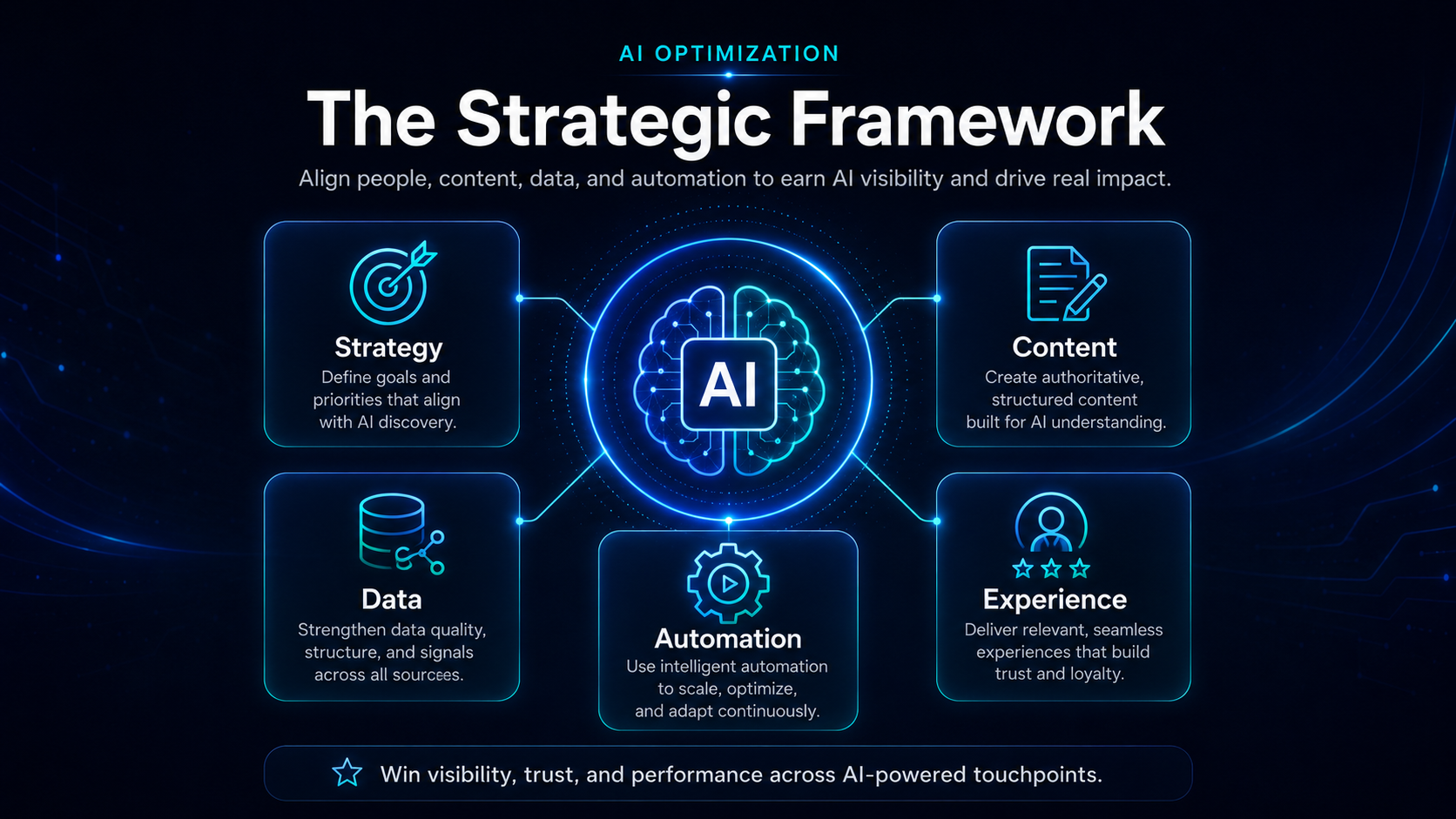
AI Optimisation is the strategic practice of aligning website structure, content, data, workflows, customer experience, and measurement so AI can improve visibility, efficiency, and commercial outcomes.
This guide explains the core AI optimisation framework, how the five layers work together, how to measure impact, and how to build an AI optimisation programme that creates real business value rather than disconnected experiments.
For industry context, see iPullRank’s AI Search Manual, Semrush’s AI search guide, Ahrefs’ AI visibility guide, and Neil Patel’s AI SEO guide.
What Is AI Optimisation?
Direct answer: AI optimisation is the process of improving a business so AI systems can understand its information, support its workflows, personalise its customer experiences, and help it perform better across digital channels.
It is broader than AI SEO, GEO, AEO, or LLMO. Those disciplines focus on AI search visibility and answer inclusion. AI optimisation includes visibility, but it also includes operational efficiency, marketing performance, data quality, customer experience, automation, and measurement.
| Area | What it improves | Business outcome |
|---|---|---|
| AI-ready website | Structure, speed, crawlability, schema | Better discoverability and trust |
| AI content | Clarity, topical depth, usefulness | More answer visibility and engagement |
| AI marketing | Targeting, messaging, segmentation | Better reach and lead quality |
| AI automation | Workflows, handoffs, repetitive tasks | More efficiency and consistency |
| AI data | Clean, connected, contextual information | Better decisions and personalisation |
AI-ready website
AI content
AI data
For a deeper definition, read What Is AI Optimization. The practical point is simple: AI optimisation is not a single department project. It becomes valuable when the whole digital system is aligned.
Why AI Optimisation Matters Now
AI is reshaping how customers discover brands, compare options, evaluate trust, and decide what to do next. A buyer may ask ChatGPT for a shortlist, read an AI Overview, compare vendors through Perplexity, and then visit the website only after AI has already shaped their thinking.
That changes the standard for digital performance. Your site must be AI-readable. Your content must be useful. Your data must be clean. Your workflows must be connected. Your customer experience must feel relevant across channels.
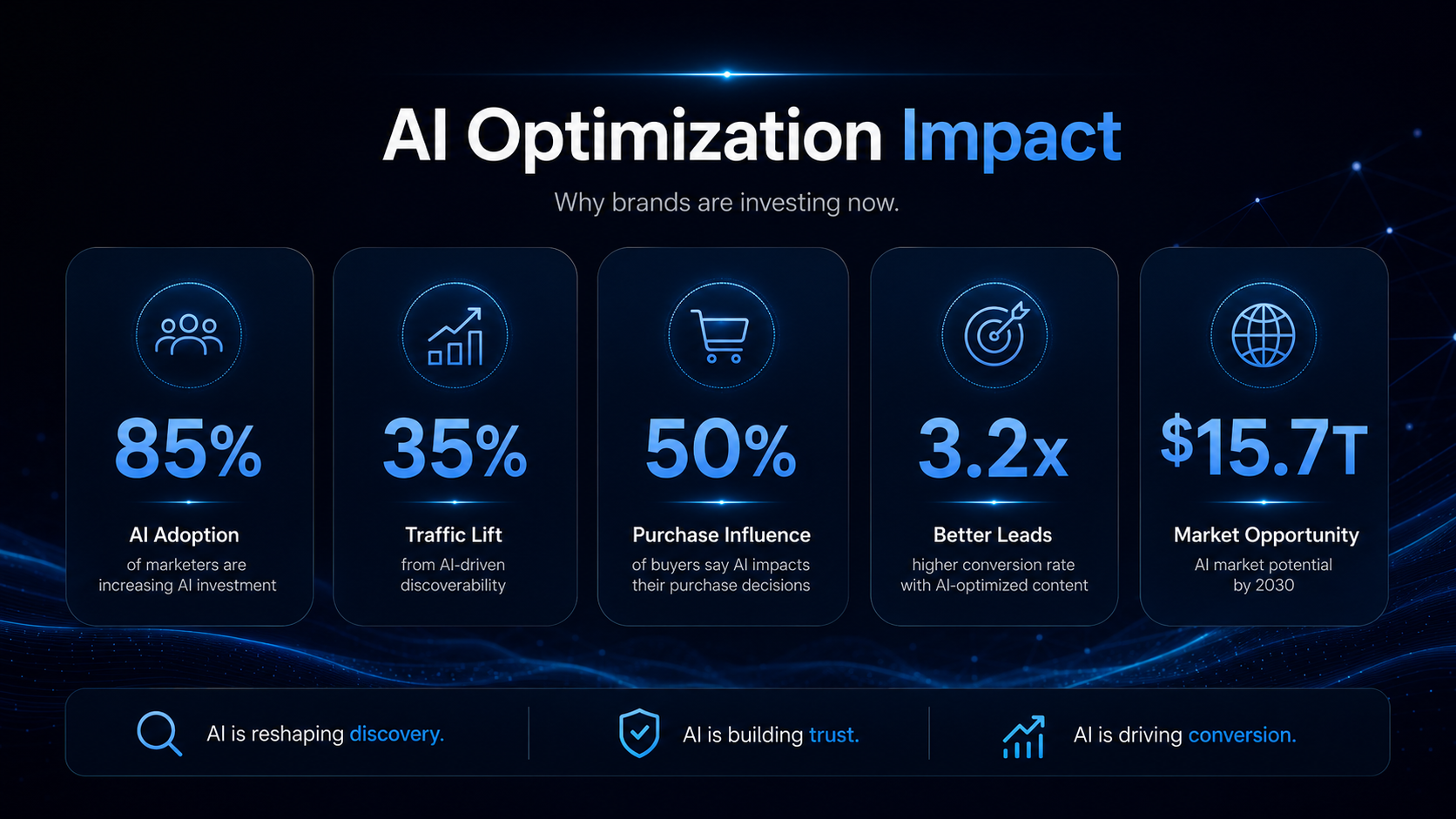
The important point is not the exact number on one chart. The important point is the direction: AI is moving from experiment to infrastructure. Companies that optimise early build compounding advantages.
“AI optimisation is not only about using AI faster. It is about making the business easier for AI systems to understand, improve, and recommend.”
— AI Recommended optimisation principleThe AI Optimisation Framework
Most failed AI projects start with tools. Strong AI optimisation starts with a framework. The goal is to connect strategy, content, data, automation, and customer experience into one system.
When those layers are disconnected, AI creates more noise. When they are aligned, AI helps the business become more visible, efficient, measurable, and useful to customers.
Keep strategy human-led. Neil Patel’s analysis explains why judgement still matters, while iPullRank’s architecture guide shows why platforms need different optimisation levers.
AI-Ready Website Optimisation
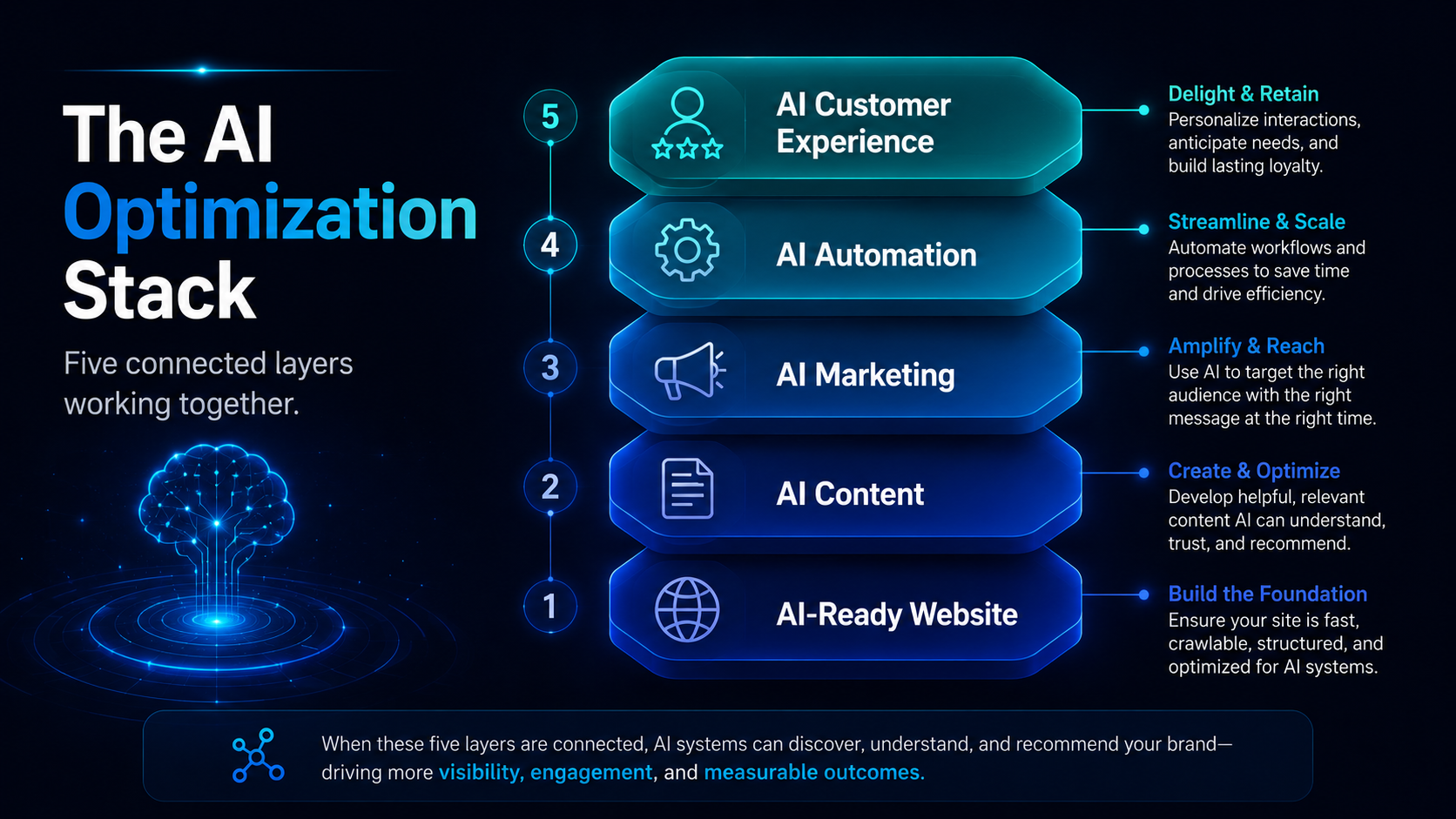
An AI-ready website is fast, crawlable, structured, clear, and easy for AI systems to parse. It is the foundation for AI search visibility, answer inclusion, and conversion.
A beautiful website can still fail AI optimisation if important content is hidden behind scripts, pages lack schema, navigation is confusing, or key service information is thin and generic.
Before AI can recommend a business, it needs to understand what the business does, who it serves, what proof supports it, and which pages answer specific user needs.
That is why AI-ready website optimisation should be treated as the first layer of the system. The website must help both people and AI systems move from discovery to trust.
For implementation guidance, review Google’s generative AI optimization guide, AI features guidance, and structured data documentation.
Use iPullRank’s Quick Start Guide for crawlability and retrieval, and Ahrefs’ freshness research for update planning.
AI Content Optimisation
AI content optimisation is not about publishing more AI-generated articles. It is about making content more useful, structured, specific, and trustworthy for real users and AI systems.
Good AI-optimised content uses clear definitions, direct-answer sections, examples, tables, citations, author proof, and internal links. Google’s guidance on generative AI content reinforces the need for accuracy, quality, relevance, and useful information rather than scaled low-value publishing.
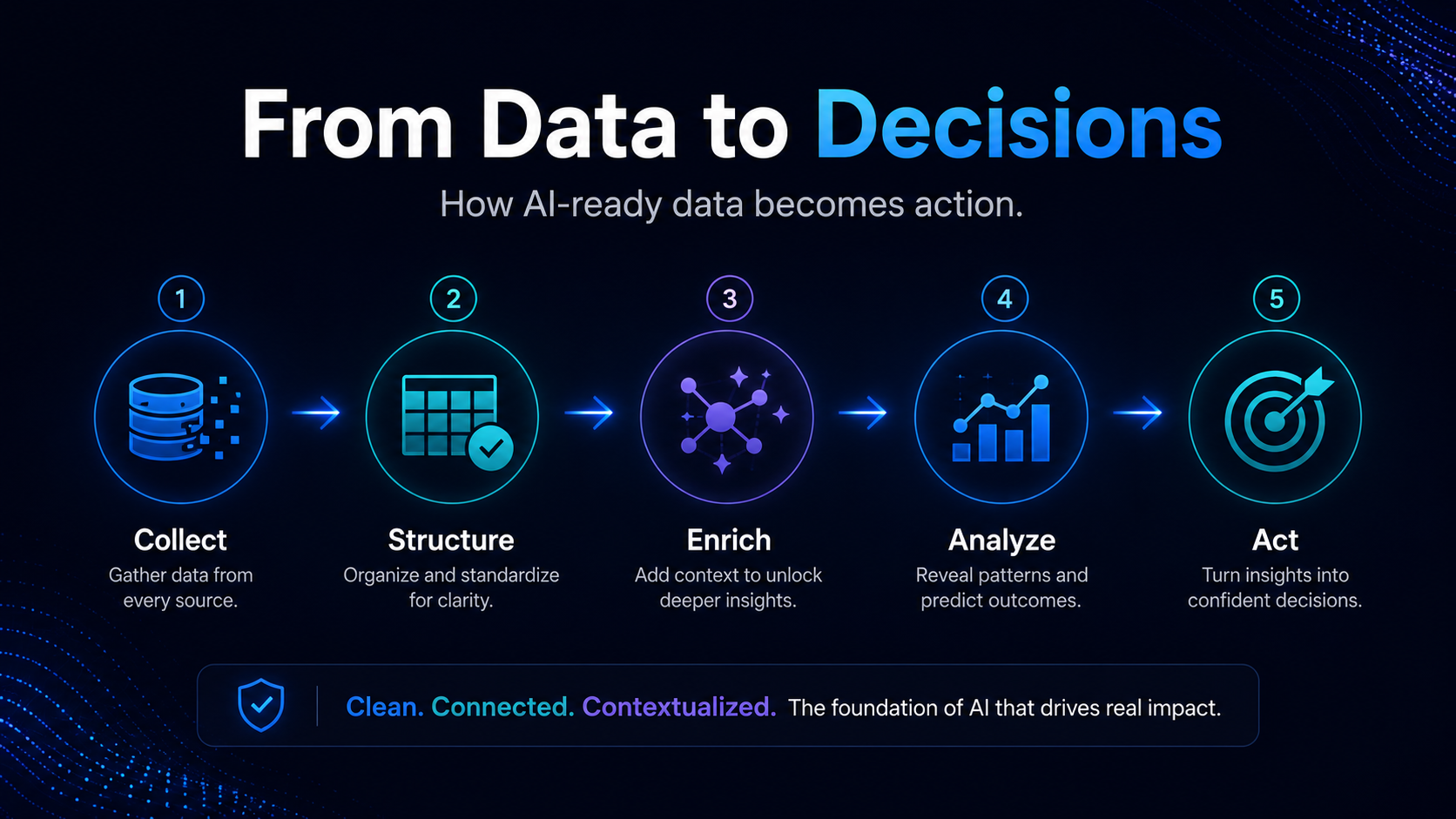
For content teams, the practical workflow is simple: map the question, answer it clearly, support it with evidence, structure it for extraction, and connect it to related topics. This connects directly with AI content optimisation.
Semrush’s content optimisation guide covers editing, while its AI content strategy connects research, planning, production, and measurement.
| Content element | Why it helps AI | How to use it |
|---|---|---|
| Direct answer | Gives models a clean answer block | Start major sections with a simple answer |
| Tables | Creates extractable comparisons | Use for features, processes, and decisions |
| Author proof | Supports trust and expertise | Add author bio, LinkedIn, and credentials |
| Internal links | Builds topical relationships | Link pillar and cluster pages naturally |
AI Marketing Optimisation
AI marketing optimisation uses AI to improve targeting, messaging, segmentation, campaign performance, content distribution, and customer journey timing.
The strongest AI marketing programmes do not automate everything blindly. They use AI to improve judgment: which audience segment needs which message, at which moment, through which channel.
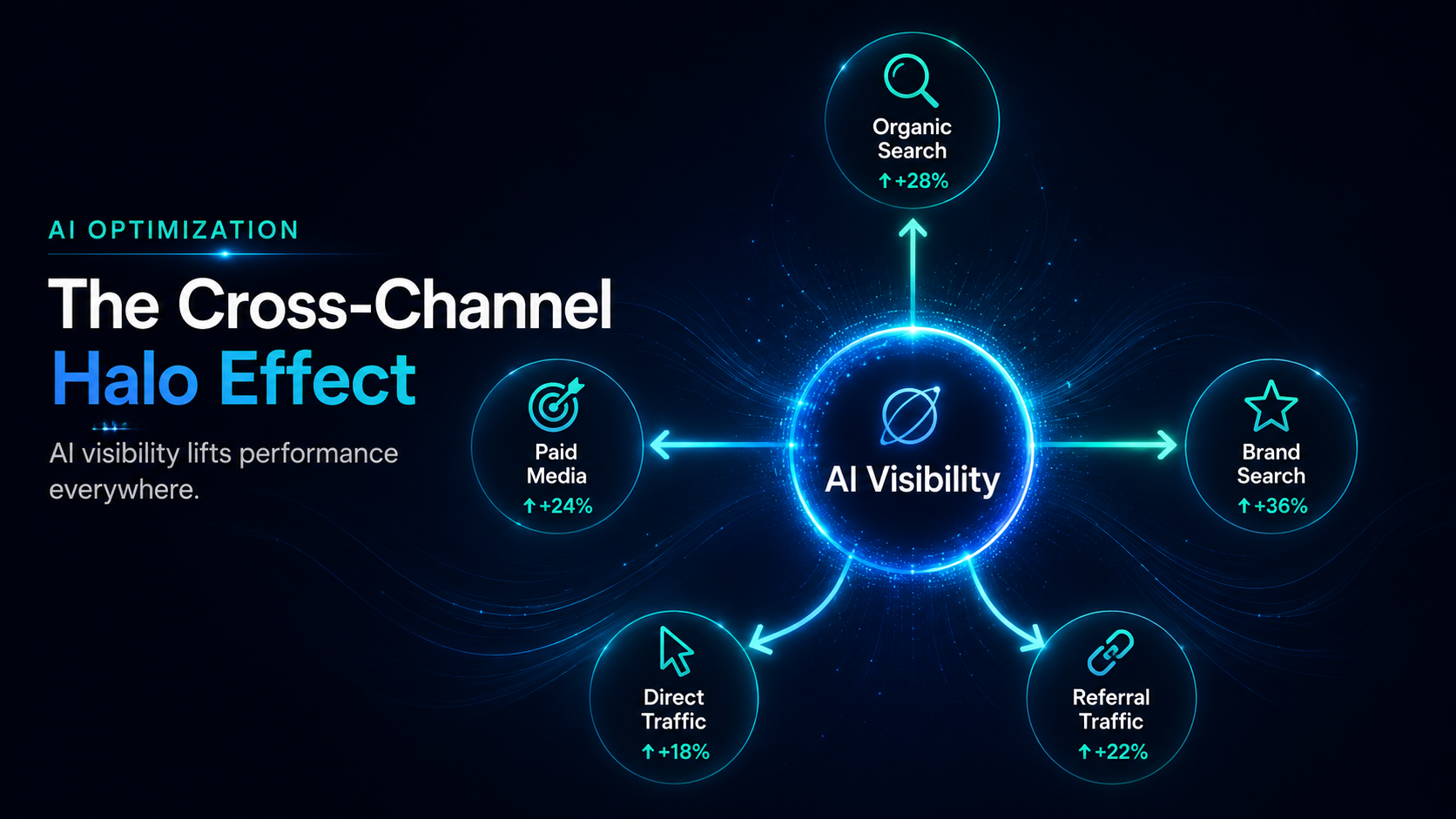
For growth teams, this connects with AI marketing optimisation. The goal is not only to generate more campaigns. The goal is to make campaigns more relevant, timely, measurable, and connected to business outcomes.
For marketing use cases, see Semrush’s AI marketing guide, Neil Patel’s marketing guide, and his AI funnel framework.
AI Automation for Business Workflows
AI automation removes friction from repeatable workflows. It can help summarise calls, classify leads, draft responses, route support tickets, enrich CRM records, generate reports, and surface next-best actions.
Automation should not be added everywhere. The best workflow candidates are repetitive, rules-based, high-volume, and measurable. Use Microsoft’s Power Automate guidance for implementation patterns and its responsible AI guidance when human review, risk, privacy, or compliance matters.
For deeper implementation, connect this layer to AI automation for business workflows.
For a practical workflow reference, see the official Microsoft Power Automate documentation, including its guidance on building, governing, and scaling automated processes.
AI Customer Experience Optimisation
AI customer experience optimisation uses AI to make interactions more relevant, helpful, and consistent across the customer journey. That includes personalisation, support, recommendations, onboarding, and retention.
Customers do not care which tool is running in the background. They care whether the answer is useful, the experience is smooth, and the business understands what they need.
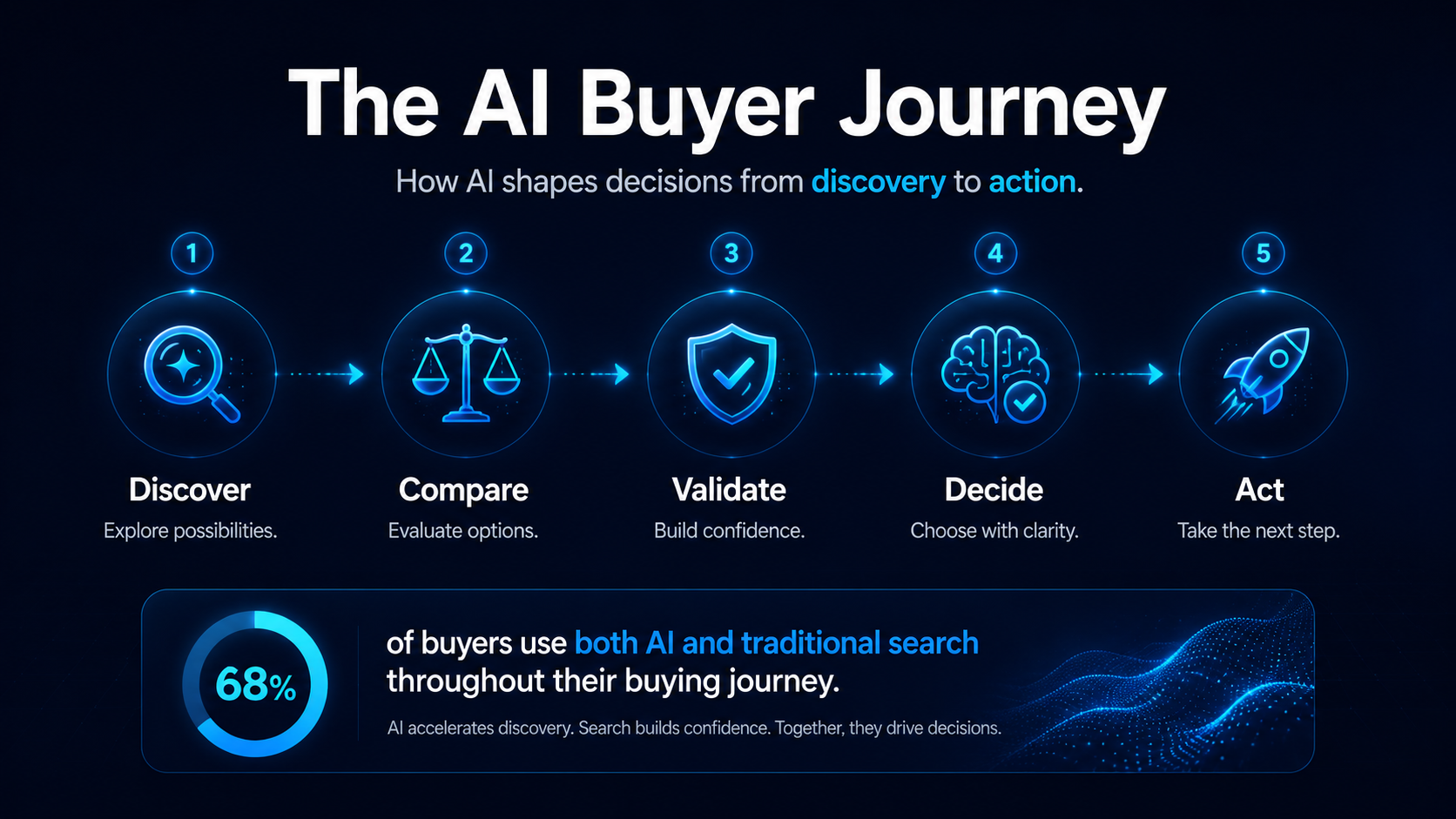
This is where AI customer experience optimisation becomes important. AI should reduce confusion, make next steps clearer, and help customers move with more confidence.
AI Data Optimisation
AI is only as useful as the data it can access and interpret. Messy, duplicated, outdated, or disconnected data produces weak insights and unreliable automation. The NIST AI Risk Management Framework provides a voluntary structure for managing trustworthiness and risk throughout the AI lifecycle.
AI data optimisation means collecting the right data, structuring it clearly, connecting systems, enriching records, and making the information usable for decisions.
Data quality affects AI understanding. Ahrefs’ brand visibility research shows how wider web signals relate to AI visibility.
.png)
For technical and operations teams, AI data optimisation is the foundation for better personalisation, reporting, forecasting, segmentation, and automation.
How to Measure AI Optimisation
AI optimisation should not be measured only by output volume. More posts, more automations, or more prompts do not automatically create value.
The better question is: did AI improve visibility, decision quality, customer experience, conversion, efficiency, or revenue impact? Use GA4 acquisition reports for traffic-source behaviour and Google’s generative AI Search Console reporting guidance for search visibility.
For measurement, use Ahrefs’ visibility audit and iPullRank’s measurement guide.
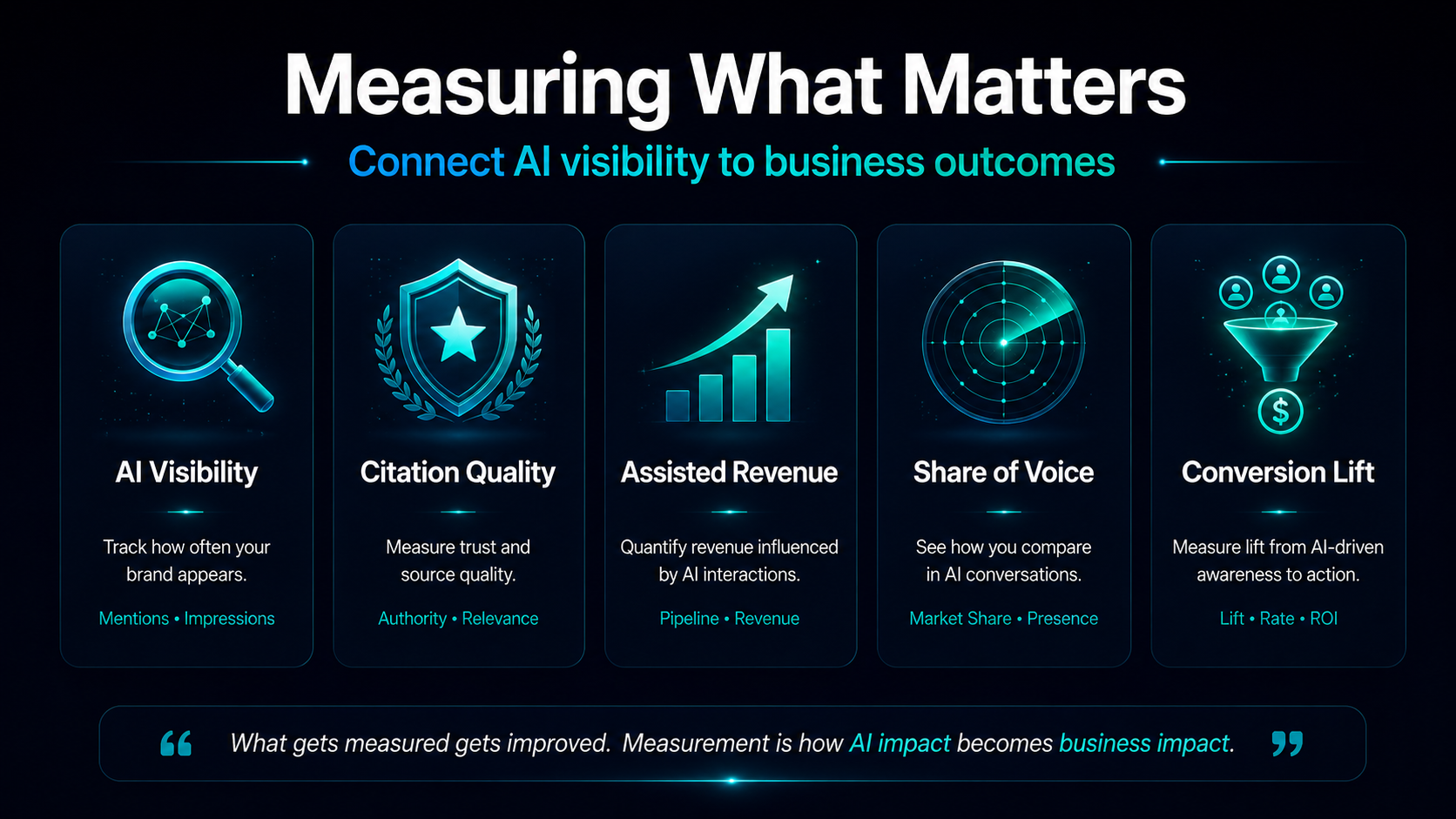
| Metric | What it measures | Why it matters |
|---|---|---|
| AI visibility | How often the brand appears in AI answers | Shows discovery strength |
| Citation quality | Whether trusted sources mention the brand | Shows credibility |
| Assisted revenue | Pipeline influenced by AI-driven discovery | Connects AI to business value |
| Workflow time saved | Hours removed from repeatable tasks | Shows operational impact |
| Conversion lift | Change in lead or sale quality | Shows customer impact |
How to Build an AI Optimisation Programme
Treat AI optimisation as an operating model, not a one-time project. The business needs a clear baseline, prioritised use cases, implementation plan, measurement system, and continuous improvement loop.
Start small, but connect the work to business outcomes. A narrow pilot with measurable results is better than a broad AI programme with no owner, workflow, or reporting. The NIST Generative AI Profile can help teams consider risks, evaluation, governance, and trustworthiness alongside commercial outcomes.
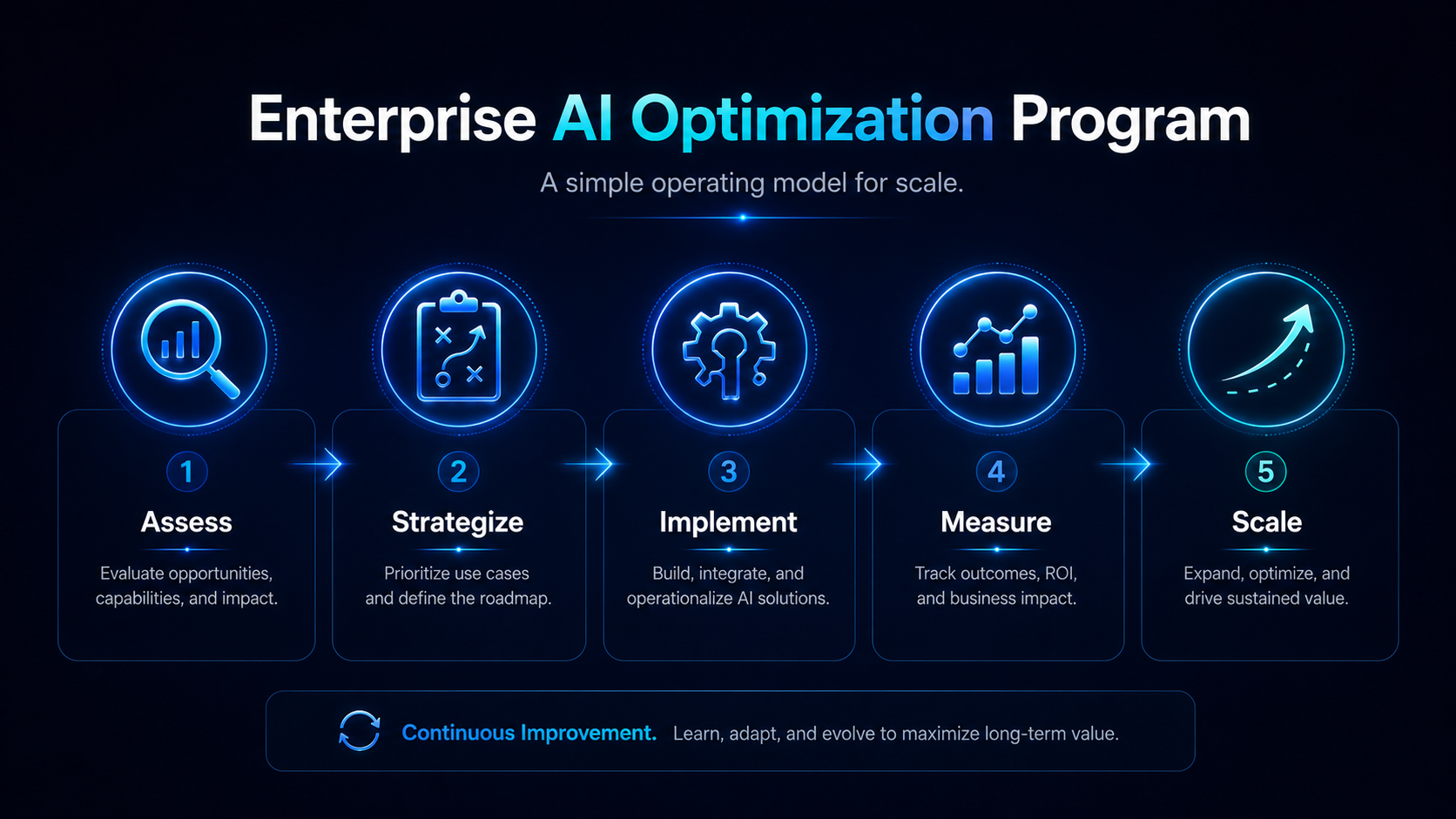
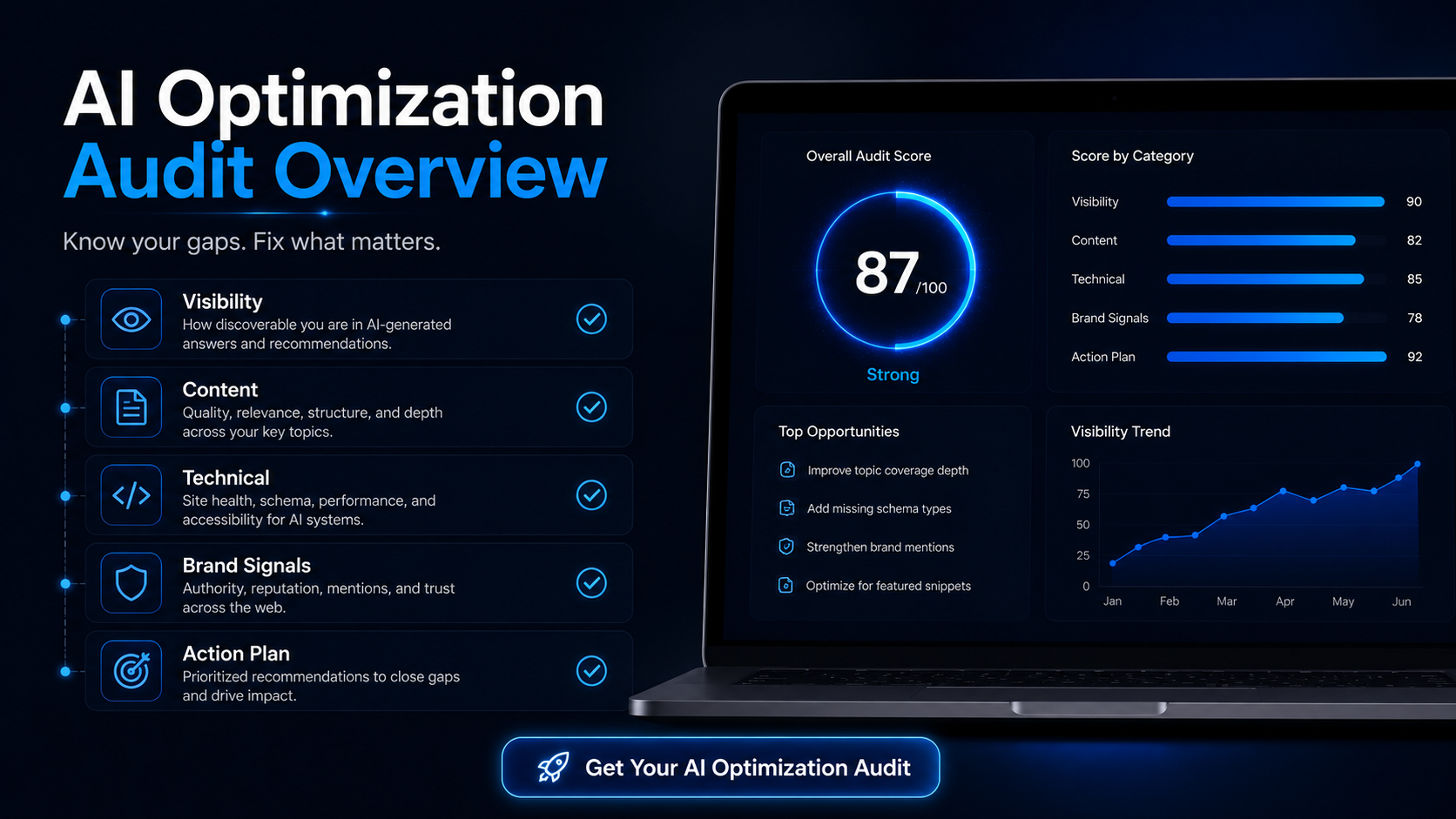
For a practical starting point, use the AI Optimization Audit guide, then request a tailored AI optimisation audit. This identifies the biggest gaps before more investment.
Common AI Optimisation Mistakes
Starting with tools: Tools matter, but they should follow strategy. First define what the business wants to improve.
Publishing more without improving quality: AI-assisted content still needs expertise, originality, structure, and usefulness.
Ignoring data quality: Poor data creates weak recommendations, bad personalisation, and unreliable reporting.
Automating broken workflows: AI can make a broken process faster, but not necessarily better.
Measuring activity instead of outcomes: AI work should connect to visibility, conversion, efficiency, customer satisfaction, or revenue impact.
Continue With the AI Optimisation Cluster Guides
Use these eight cluster guides for website readiness, strategy, content, marketing, automation, customer experience, data, and auditing.
Frequently Asked Questions
What is AI optimisation?
AI optimisation is the process of aligning website structure, content, data, workflows, marketing, and customer experience so AI can improve visibility, efficiency, personalisation, and business outcomes.
How is AI optimisation different from AI SEO?
AI SEO focuses on crawlability, indexability, and visibility inside AI-powered search. AI optimisation is broader and includes content, marketing, automation, data, customer experience, and measurement.
What should businesses optimise first?
Most businesses should start with an AI optimisation audit, then fix the website, data, and content foundations before scaling automation.
Does AI optimisation replace human teams?
No. It supports human teams by improving speed, consistency, insight, and execution. Strategy, judgment, brand voice, and decision-making still need human direction.
How long does AI optimisation take?
Basic improvements can begin within weeks. Larger gains usually compound over three to twelve months as content, data, workflows, and measurement improve together.
Key Takeaways
- AI optimisation is a business-wide system, not a single AI tool.
- The core layers are website, content, marketing, automation, data, and customer experience.
- AI work should be tied to measurable outcomes such as visibility, conversion, efficiency, and revenue impact.
- Clean data and clear content make AI more useful.
- An AI optimisation audit is the safest starting point before scaling tools or workflows.

About the Author
Marcus Hibbert is the founder of AI Recommended, a leading Generative Engine Optimisation (GEO) agency helping UK B2B technology companies become the trusted recommendation across ChatGPT, Google AI Mode, AI Overviews, Gemini, Claude, Perplexity and Microsoft Copilot whenever decision-makers search for products, services and solutions.
Connect with Marcus on LinkedIn.
Request an AI Optimisation Audit
Discover how AI platforms describe, cite and recommend your brand across the prompts your ideal buyers use—and uncover opportunities to become AI's trusted recommendation.
By submitting this form, you’re requesting an AI Optimisation audit for your brand.

How to Prepare Your Website for AI Tools, Search, and Automation
.png)
How to Improve Campaigns, Targeting, Content, and Performance With AI
How to Improve Support, Personalization, and User Journeys
Clean, structured data is what makes AI models perform well
A clear score of how AI-ready your business actually is